
Creator trust is the single most powerful factor driving skincare and beauty purchases among consumers aged 18–34 today. 61% of consumers trust creator recommendations over traditional advertising. That number alone explains why a 30-second TikTok review from a niche skincare creator moves more product than a full-page magazine ad. The role of creator trust in purchasing goes beyond preference. It shapes what you click, what you add to your cart, and what you actually keep. Understanding how that trust works gives you a real edge when you shop.
How does creator trust influence consumer purchasing decisions?
Creator trust reduces the perceived risk of buying a product you have never tried before. Skincare is personal. The wrong moisturizer can break you out. The wrong SPF can leave a white cast. When a creator you follow has skin like yours and explains exactly how a product performs, the risk feels smaller. Trust lowers perceived purchase risk by making consumers feel safer trying new beauty products, and creator expertise is the primary driver of that trust.

The psychological mechanism behind this is well documented. Consumer engagement, defined as emotional and interactive participation with a creator's content, significantly drives brand trust with a statistical effect of β = 0.636 (p < 0.001). That means the more you comment, save, and react to a creator's posts, the more you trust the brands they recommend. Engagement is not just a vanity metric. It is the mechanism that converts creator credibility into purchase intent.
This process works in layers:
- Expertise signals: A creator who explains ingredient interactions or demonstrates a patch test reads as knowledgeable, not just promotional.
- Relatability cues: Seeing a creator with your skin tone or skin type use a product makes the outcome feel predictable for you.
- Consistency over time: Creators who return to the same products across multiple videos build a track record that advertising cannot replicate.
- Interactive responses: Creators who answer questions in comments or address side effects directly reinforce trust through accountability.
Pro Tip: Before buying a product a creator recommends, scroll their comments. If they respond to questions about skin reactions or ingredient concerns, that accountability is a strong trust signal.
The influence of creator trust does not operate in isolation. Creator trust strongly drives purchase decisions but depends on product quality. Trust mediates purchase intent, but it cannot substitute for a product that actually delivers results. Keep that in mind when a creator's enthusiasm outpaces their evidence.
Why do micro-influencers inspire more trust than celebrities in beauty?
The "Celebrity Paradox" is one of the most counterintuitive findings in influencer research. As a creator's audience grows, their perceived relatability drops. Micro-influencers are seen as peers while celebrities read as commercial billboards. That shift in perception has a direct effect on purchasing behavior.
The numbers back this up clearly. Micro-influencers achieve 5% engagement rates compared to 1.2% for celebrity creators, and they earn 20–30% higher trust ratings among consumers aged 18–25. Higher engagement means more people are actually paying attention, asking questions, and acting on recommendations.
| Factor | Micro-influencers | Celebrity creators |
|---|---|---|
| Average engagement rate | 5% | 1.2% |
| Trust rating (ages 18–25) | 20–30% higher | Baseline |
| Perceived relatability | Peer-level | Commercial figure |
| Niche authority | High | Low to moderate |
| Accountability perception | Personal | Institutional |
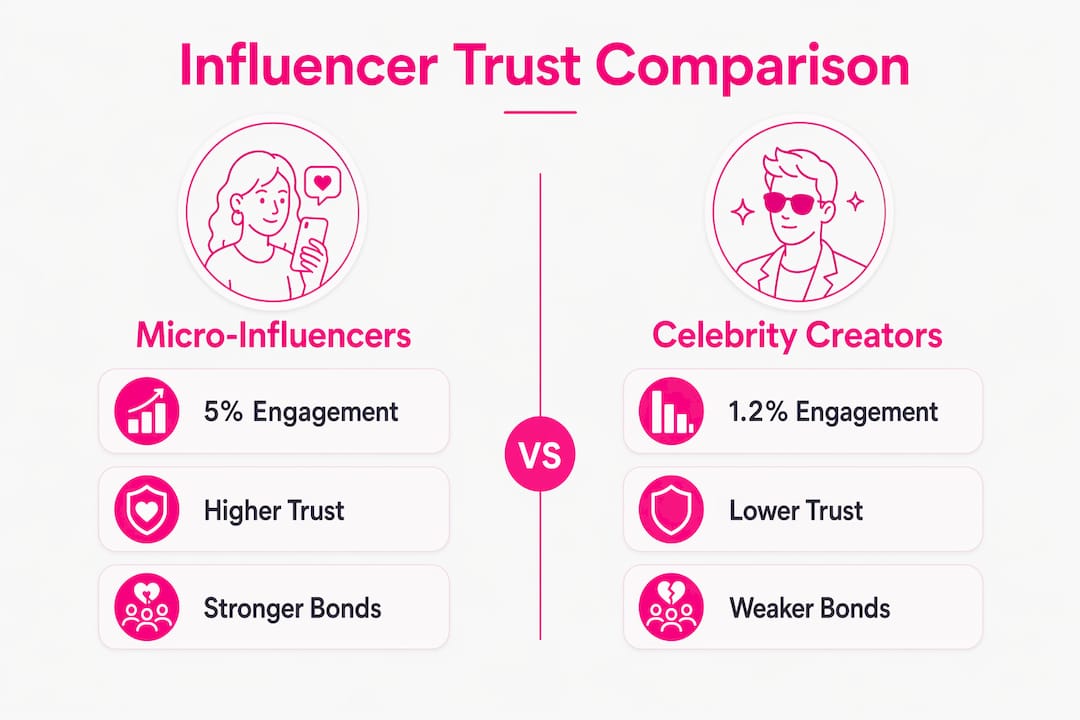
Why does this gap exist? Parasocial bonds explain most of it. A parasocial bond is the one-sided relationship you form with a creator whose content you consume regularly. You know their skin concerns, their product failures, their honest opinions. That familiarity creates a sense of personal connection that celebrity endorsements simply cannot manufacture.
Micro-influencers also maintain niche authority. A creator who focuses exclusively on glass-skin routines or acne-prone skin care builds a reputation as a specialist. Specialists are trusted more than generalists, especially when the stakes involve your skin. The Celebrity Paradox confirms that scale works against trust in this category.
Here is what this means practically for you as a shopper:
- A creator with 15,000 followers who posts detailed ingredient breakdowns is likely more reliable than a celebrity with 5 million followers posting a sponsored selfie.
- Niche creators who specialize in your skin type carry more relevant authority than broad lifestyle influencers.
- Engagement quality matters more than follower count. Look for creators whose audiences ask real questions and get real answers.
How does transparency shape creator credibility and buying behavior?
Transparency is not just a nice-to-have quality in creator content. It is the mechanism that keeps trust intact after a sponsorship is disclosed. Sponsorship disclosure framed as a partner choice preserves creator credibility far better than a standard legal footnote buried in a caption. When a creator says "I partnered with this brand because I've been using this serum for six months," that context reads as honest. A generic "#ad" with no explanation reads as transactional.
Content authenticity works the same way. Sharing unfiltered content like skin flaws, failed trials, and honest reactions creates stronger parasocial bonds than polished, commercial-looking videos. Consumers aged 18–34 have grown up with advertising. They recognize a sales pitch. Raw, real content cuts through that skepticism in a way that studio-quality production cannot.
Brands and creators winning in 2026 prioritize what researchers call "content utility." Consumers reject repetitive, surface-level content and respond to clear, useful information that helps them make decisions. Content utility means showing how a product performs on different skin types, explaining what an ingredient actually does, or demonstrating a full routine rather than a single product shot.
Here is how the most trusted creators build that utility into their content:
- Show the full routine. Placing a product in context of a complete skincare routine helps viewers understand how it fits their own regimen.
- Disclose partnerships early and honestly. Stating the relationship upfront, with context, signals respect for the audience.
- Document failures. A creator who shares a product that did not work for them builds more credibility than one who only posts positive reviews.
- Answer ingredient questions. Creators who explain why an ingredient works, not just that it works, demonstrate genuine expertise.
- Return to products over time. A creator who mentions the same serum across three months of content signals real use, not a one-off promotion.
Pro Tip: Check whether a creator revisits sponsored products in later, non-sponsored content. Repeat mentions without payment are the strongest signal of genuine endorsement.
44% of consumers abandon a purchase when product information is unclear or incomplete. Creators who provide detailed, honest content directly reduce that drop-off and convert more of their audience into buyers.
How to evaluate creator trustworthiness before you buy
Not every creator who seems trustworthy actually is. Knowing what to look for protects your wallet and your skin. The impact of influencer trust on your purchases is real, but so is the risk of being misled by polished content that prioritizes aesthetics over accuracy.
Use these signals to assess a creator before you act on their recommendation:
- Specificity over enthusiasm. A trustworthy creator names ingredients, explains concentrations, and describes how a product feels on their skin. Vague praise like "this is amazing" tells you nothing.
- Skin type alignment. A creator with oily, acne-prone skin recommending a rich face oil for everyone is a red flag. Look for creators whose skin type and concerns match yours.
- Honest negative reviews. A creator who only posts positive content is either very lucky or very selective. Honest reviewers acknowledge what did not work and why.
- Disclosure clarity. Look for upfront, contextual disclosures rather than buried hashtags. Creators who are transparent about paid partnerships are more likely to be transparent about product performance.
- Engagement quality. Scroll the comments. Real trust shows up in real conversations, not just emoji reactions.
- Longevity of recommendation. A product mentioned once in a sponsored post carries less weight than one a creator references repeatedly across months of content.
Trustworthiness in online shopping is not automatic. It is earned through consistent, honest, and useful content. When you find a creator who meets these criteria, their curated product picks become a genuine shortcut to products that work.
Key Takeaways
Creator trust is the primary driver of beauty purchase decisions among consumers aged 18–34, and micro-influencers with niche authority, transparent disclosures, and honest content consistently outperform celebrity endorsements in both engagement and trust.
| Point | Details |
|---|---|
| Trust reduces purchase risk | Creator expertise makes consumers feel safer trying new skincare products. |
| Engagement drives brand trust | Emotional and interactive participation with creator content converts credibility into purchase intent. |
| Micro-influencers outperform celebrities | 5% vs. 1.2% engagement rates and 20–30% higher trust ratings favor niche creators. |
| Transparency preserves credibility | Disclosures framed as genuine partner choices maintain trust better than legal footnotes. |
| Content utility wins | Clear, useful information outperforms high-volume promotional content in building lasting trust. |
What I have learned watching creator trust evolve in beauty
I have watched the beauty creator space shift dramatically over the past few years, and the change that stands out most is not the rise of short-form video. It is the collapse of tolerance for content that wastes your time.
Consumers aged 18–34 are the most advertising-literate generation in history. They grew up skipping pre-roll ads and scrolling past sponsored posts. What cuts through is specificity and honesty. The creators who have built lasting influence in skincare are not the ones with the biggest budgets or the most followers. They are the ones who treat their audience as intelligent adults who deserve real information.
The shift from celebrity to micro-influencer preference is not a trend. It is a structural change in how trust forms online. When a creator with 20,000 followers tells you a Korean essence changed their skin texture, and they show you their skin before and after, and they explain the ingredient doing the work, that is a fundamentally different experience than a celebrity posting a glossy brand photo. One feels like advice from a knowledgeable friend. The other feels like a billboard.
My honest advice: stop following creators who make you feel like you need everything they post. Start following creators who make you feel like you understand your own skin better after watching them. That shift in how you consume beauty content will change what you buy and how satisfied you are with those purchases.
— Minwoong
Thepicks: where creator trust meets curated K-beauty
Thepicks was built on a simple premise: every product recommendation should come from a creator who has actually tested it. The platform connects US shoppers with Korean beauty products that real creators have reviewed, used, and personally selected for their shelves.
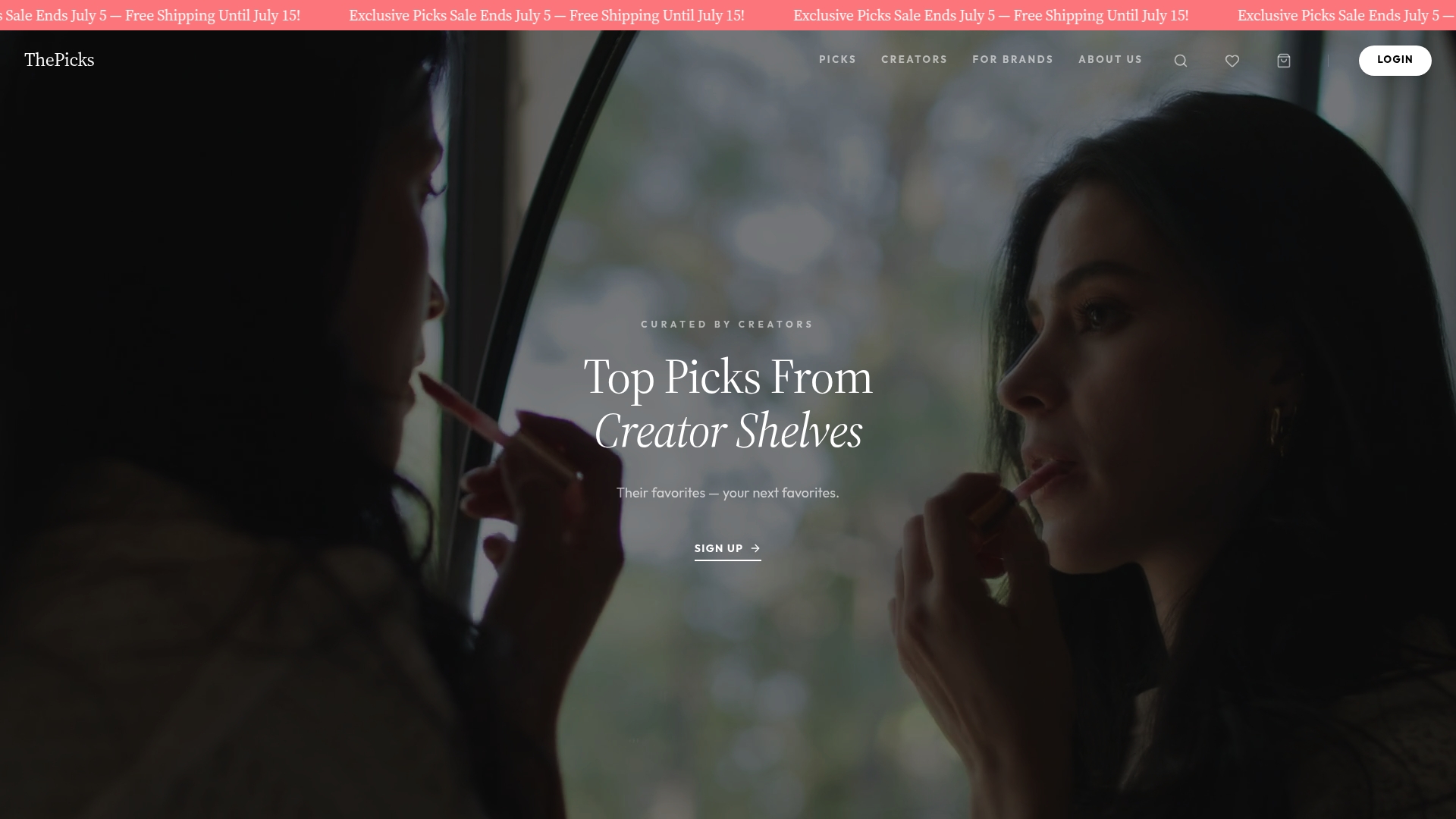
Creators like Annika Titcomb, Brittany Imoh, and Alexandra Martinez Rodriguez each maintain their own curated creator shelves on Thepicks, where every pick reflects genuine use rather than a paid placement. If you want to apply what you have read here about creator credibility and sales, Thepicks gives you a direct path to products backed by the kind of transparent, tested recommendations that actually hold up. Browse Annika's picks or Brittany's selections to see creator trust in practice.
FAQ
What is the role of creator trust in purchasing beauty products?
Creator trust reduces the perceived risk of trying new skincare products by making recommendations feel personal and credible. Consumers who trust a creator are significantly more likely to purchase the products that creator recommends.
Why do micro-influencers drive more purchases than celebrities?
Micro-influencers achieve 5% engagement rates versus 1.2% for celebrities and earn 20–30% higher trust ratings among consumers aged 18–25. Their niche authority and relatability make their recommendations feel more credible than celebrity endorsements.
How does sponsorship disclosure affect creator credibility?
Disclosures framed as genuine partner choices preserve creator credibility better than standard legal footnotes. Consumers respond more positively when a creator explains why they chose to work with a brand rather than simply tagging a post as an ad.
Can creator trust replace product quality in driving sales?
Creator trust mediates purchase intent but cannot substitute for product performance. Even highly trusted creators cannot sustain sales if the product does not meet consumer expectations.
What content signals indicate a trustworthy beauty creator?
Look for specific ingredient explanations, honest negative reviews, clear sponsorship disclosures, and repeated mentions of the same product across non-sponsored content. These signals indicate genuine expertise and accountability rather than promotional volume.