
A beauty app recommendation is an AI-generated, personalized product suggestion based on objective skin analysis and dermatologist-validated logic, not generic trends or guesswork. For US women aged 18–34, this technology has changed how skincare and makeup decisions get made. Instead of relying on store advisors or trending TikTok products, you get suggestions matched to your actual skin type, concerns, and goals. The best beauty apps now use camera-based analysis to detect conditions your eye would miss, then map those findings to clinically vetted products.
What is a beauty app recommendation, really?
A beauty app recommendation is not the same as a sponsored post or a bestseller list. It is a data-driven output generated after an app analyzes your skin through your phone camera or a detailed intake process. The industry term for this technology is AI-powered skin analysis, and it sits at the core of every credible personalized beauty platform.
The distinction matters because most shoppers still confuse algorithmic suggestions with genuine personalization. A recommendation engine that only asks "What is your skin type?" and offers a dropdown menu is not the same as one that scans your face and detects dehydration, uneven texture, or hyperpigmentation in real time. AI skin analysis tools in 2026 detect 15+ skin concerns and 8 skin types with 95% reliability. That level of accuracy means the product suggestions you receive are grounded in measurable data, not self-reported guesses.
The gap between primitive and advanced recommendation logic is where most apps fail. Dermatological logic is crucial for accurate product matches, yet most apps rely on image analysis alone without mapping findings to clinically validated product-to-condition pairings. A great scan means nothing if the recommendation engine behind it is not built on sound dermatological reasoning.
How AI skin analysis drives accurate product matches
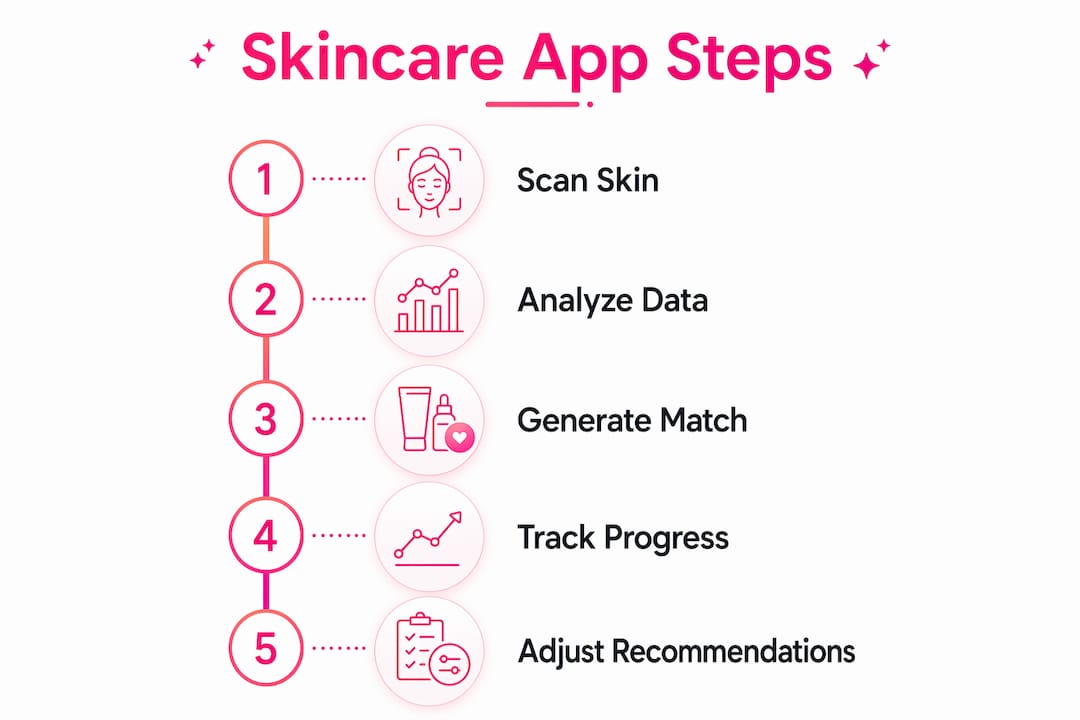
The technology behind top beauty application recommendations works in two stages: data collection and recommendation logic. Data collection happens through your phone camera, which captures skin texture, tone, pore size, and surface conditions. Recommendation logic then maps those findings to specific ingredients and formulations that address each detected concern.
Scan-based recommendations via phone cameras increase trust by providing measurable skin data versus misleading self-assessments. This matters because most people misidentify their own skin type. Someone who thinks they have oily skin may actually have dehydrated skin that overproduces oil as a response, and a questionnaire will never catch that distinction.

The best apps also track changes over time. If your skin becomes drier in winter or more reactive after switching products, a scan-based system detects the shift and updates its suggestions accordingly. Questionnaire-based apps cannot do this because they rely on static, self-reported inputs that rarely get updated.
Pro Tip: Re-scan your skin every 4–8 weeks, especially when seasons change or you introduce new products. Skin conditions shift, and your recommendations should shift with them.
Apps used by 800+ partner networks have proven that this kind of objective measurement scales across diverse skin tones and types. That scale also signals that the underlying technology has been tested across a wide population, which improves reliability for users across different demographics.
Virtual try-on vs. AI consultation: what is the difference?
These two categories of beauty apps serve completely different purposes, and mixing them up leads to frustration. Understanding the distinction helps you choose the right tool for the right job.
Virtual try-on (VTO) apps use augmented reality to overlay lipstick shades, eyeshadow palettes, or foundation tones onto your face in real time. They are aesthetic tools built for experimentation and fun. They do not analyze your skin health, detect concerns, or recommend products based on clinical logic. Think of them as a digital mirror with a color filter.
AI consultation apps use clinical logic and camera-based data to generate product recommendations and track skin health over time. They are utility tools built for results. Users must distinguish between virtual try-on apps, which are aesthetic tools, and AI consultation platforms that base routines and product lists on dermatological logic.
| Feature | Virtual try-on apps | AI consultation apps |
|---|---|---|
| Primary purpose | Aesthetic experimentation | Skin health and product matching |
| Data input | Live camera overlay | Skin scan and analysis |
| Recommendation basis | Color and shade preference | Dermatological logic |
| Tracks skin changes over time | No | Yes |
| Best for | Makeup shopping, color testing | Skincare routines, ingredient selection |
The smartest approach is to use both. Pick one VTO app for makeup exploration and one AI consultation app for skincare decisions. Successful users combine one creative and one utility app rather than expecting a single platform to do everything well.
How to choose beauty apps that actually work
Choosing the right beauty app comes down to a few non-negotiable features. Not every app with a sleek interface delivers real results, and knowing what to look for saves you time and money.
- Camera-based skin analysis. Skip any app that only offers a text questionnaire. Objective image analysis is the baseline for accurate recommendations.
- Dermatologist-validated recommendation logic. The app should explain why it recommends a product, not just list options. Look for ingredient-to-concern mappings in the results.
- Dynamic updates. The best apps adjust recommendations as your skin changes. Static suggestion lists go stale within weeks.
- Hands-free or voice-activated workflows. AI beauty apps that prioritize hands-free workflows boost retention among young women because fast, actionable routines outperform manual data entry every time.
- No-install web options. Web-based tools that run in your browser remove friction and make it easier to scan your skin without committing to a download.
A common pitfall is trusting apps that ask you to manually type your skin type. Self-reported skin classification is notoriously inaccurate. Objective, image-based analysis reduces human misclassification compared to traditional quizzes, which directly improves product match and reduces returns.
Pro Tip: When evaluating a new beauty app, run its skin scan and then compare the detected concerns against what a dermatologist has told you in the past. If the app's findings align, its recommendation logic is worth trusting.
For makeup-specific decisions, pair your AI consultation app with a VTO tool to test how recommended shades actually look on your face before buying. This two-app workflow covers both clinical accuracy and visual confidence.
How personalized recommendations change the way you shop
Personalized beauty app recommendations do more than suggest products. They shift how you evaluate, buy, and stick with skincare and makeup. The impact shows up in measurable ways.
93% of app users noticed improved skin hydration within 4 weeks of using AI-driven daily tracking to optimize their routines. That result comes from consistency, not luck. When an app tells you exactly which serum to use, in what order, and why, you follow through more reliably than when you are guessing.
Personalized recommendations also reduce wasted spending. When a product is matched to your detected skin concerns rather than your assumed skin type, the chance of a mismatch drops significantly. Fewer returns, fewer half-used bottles, and more confidence in what you buy. Transparent skin analysis metrics build that confidence because you can see the data behind each suggestion.
Apps now generate personalized makeup styles based on face shape and undertone analysis, not just shade preferences. This means a recommendation for a contour product or blush placement is tied to your actual facial structure, not a generic tutorial. The result feels less like advice and more like a consultation.
Key Takeaways
A beauty app recommendation is most effective when it combines camera-based skin analysis with dermatologist-validated product logic, not just a questionnaire or a trending list.
| Point | Details |
|---|---|
| Definition matters | A beauty app recommendation is AI-generated and based on objective skin data, not generic trends. |
| Scan beats questionnaire | Camera-based analysis detects 15+ skin concerns with 95% reliability; self-reporting cannot match that. |
| Two app types, two purposes | Virtual try-on apps handle aesthetics; AI consultation apps handle clinical product matching. |
| Re-scan regularly | Skin changes with seasons and products, so update your scan every 4–8 weeks for accurate results. |
| Curated integration wins | Using one VTO app and one AI consultation app together delivers better results than any single platform. |
Why I think most people are using beauty apps wrong
I have spent a lot of time watching how women in the 18–34 range actually interact with beauty apps, and the pattern is consistent. They download a visually appealing app, take one scan, get a list of products, and then never open the app again. The technology is not the problem. The habit is.
The real value of AI-driven personalization compounds over time. A single scan gives you a starting point. Monthly scans give you a trend line. That trend line tells you whether your current routine is working, whether a new product caused a reaction, and whether your skin is improving. No store advisor can offer that kind of longitudinal data.
The other mistake I see constantly is expecting one app to cover everything. No single platform excels equally at makeup color matching, skincare ingredient analysis, and hair texture assessment. Curated integration is the best consumer approach: use specialized apps for specific goals rather than forcing one tool to do everything. It feels like more work upfront, but the results are dramatically better.
The future of this space points toward multimodal AI that combines skin, hair, and makeup analysis in one session. That technology is developing, but it is not ready yet. Until it is, prioritize clinical validity over novelty. An app that accurately identifies your skin barrier damage and recommends a ceramide-rich moisturizer will always outperform a flashy app that guesses your "skin personality." Choose tools built on dermatological reasoning, and rate products honestly based on real results rather than packaging appeal.
— Minwoong
Creator-validated picks that complement your beauty app results
Thepicks connects US shoppers with Korean beauty products that real creators have tested, reviewed, and personally recommended. Every product on the platform goes through hands-on evaluation before it appears in a creator's collection.
When your AI consultation app identifies a concern like dehydration, uneven texture, or dullness, Thepicks gives you a place to find products that address those exact issues, backed by creator experience rather than brand marketing. Browse curated creator picks from beauty creators who have already done the testing work for you. If you want to start with a specific creator's routine, collections from creators like Cindy Nguyen and Haley Gansel offer skincare and makeup selections built around real skin results. Thepicks ships Korean beauty brands directly to US customers, so what your app recommends, you can actually find and buy.
FAQ
What is a beauty app recommendation based on?
A beauty app recommendation is based on AI-driven skin analysis that detects conditions like dehydration, hyperpigmentation, and uneven texture through your phone camera, then maps those findings to clinically validated products.
Which beauty app is best for skincare?
The best skincare app uses camera-based analysis rather than a questionnaire, updates recommendations as your skin changes, and applies dermatologist-validated logic to match products to your detected concerns.
How often should I use a beauty app for accurate results?
Re-scan your skin every 4–8 weeks. Skin conditions shift with seasons, stress, and product changes, and regular scans keep your recommendations current.
What is the difference between virtual try-on and AI consultation apps?
Virtual try-on apps use augmented reality for aesthetic experimentation with colors and shades. AI consultation apps analyze your skin health and generate product recommendations based on clinical data.
Are beauty app recommendations reliable?
AI skin analysis tools in 2026 detect 15+ skin concerns and 8 skin types with 95% reliability, making scan-based recommendations significantly more accurate than self-reported skin type assessments.