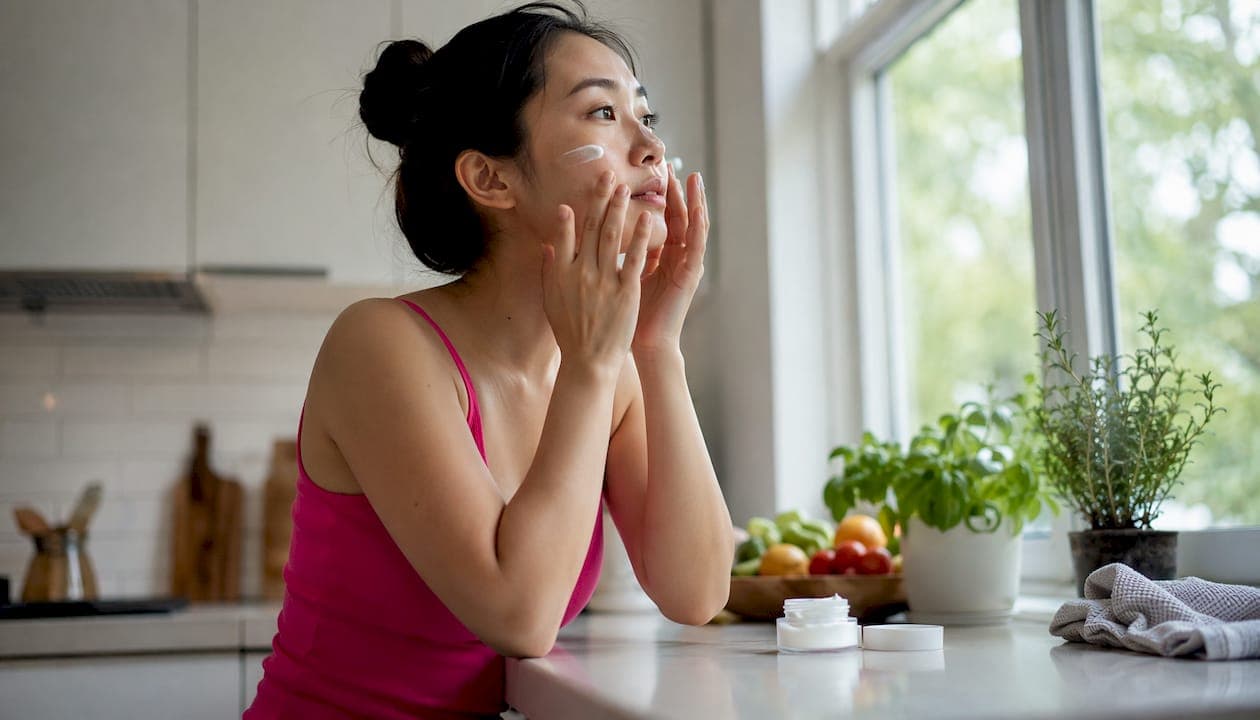
Choose a Korean sunscreen that matches your skin type and finish preference, and prioritize modern photostable filters over SPF number alone. For daily use, a high SPF and PA rating providing strong UVB and UVA protection is the standard to aim for. For US shoppers, sourcing matters just as much as formula: creator-tested picks from Thepicks ship directly to your door and come with ingredient breakdowns and honest reviews. Jump to your skin-type section below or browse the curated K-beauty shelf to find your match.
Table of Contents
- What are the best Korean sunscreens for your skin type?
- How do you choose the best Korean sunscreen?
- What format and texture should you choose?
- What ingredients and filter differences should US shoppers know about?
- How do you apply Korean sunscreen correctly?
- Why do dermatologists and creators keep recommending K-beauty SPF?
- Key Takeaways
- The case for cosmetic elegance as the deciding factor
- Where to find creator-tested Korean sunscreens shipped to the US
- Useful sources and further reading
What are the best Korean sunscreens for your skin type?
Not all K-beauty sunscreens are built the same, and the finish that works for oily skin in a humid summer will feel wrong on dry skin in January. Here is a quick category guide so you can skip straight to what fits your routine.
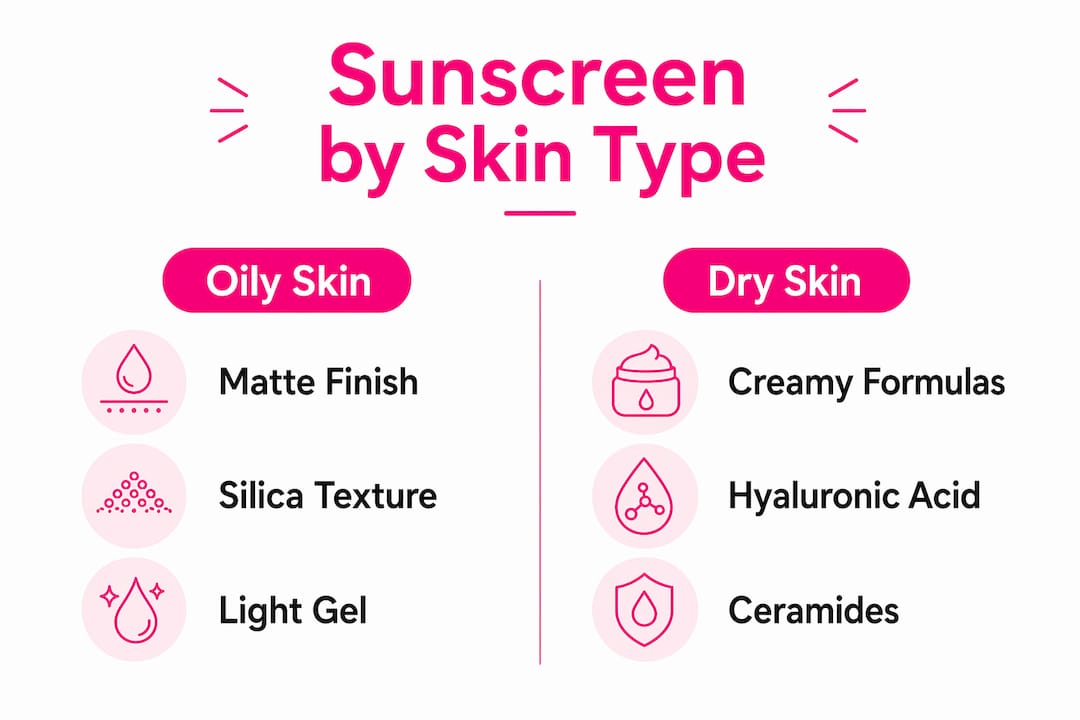
Oily and acne-prone skin needs a matte or natural finish with a lightweight gel or fluid texture. Look for silica (oil absorption), niacinamide (pore-minimizing and brightening), and non-comedogenic formulas. House of Hur Weightless Sun Fluid absorbs instantly and leaves a refreshing matte finish without clogging pores.
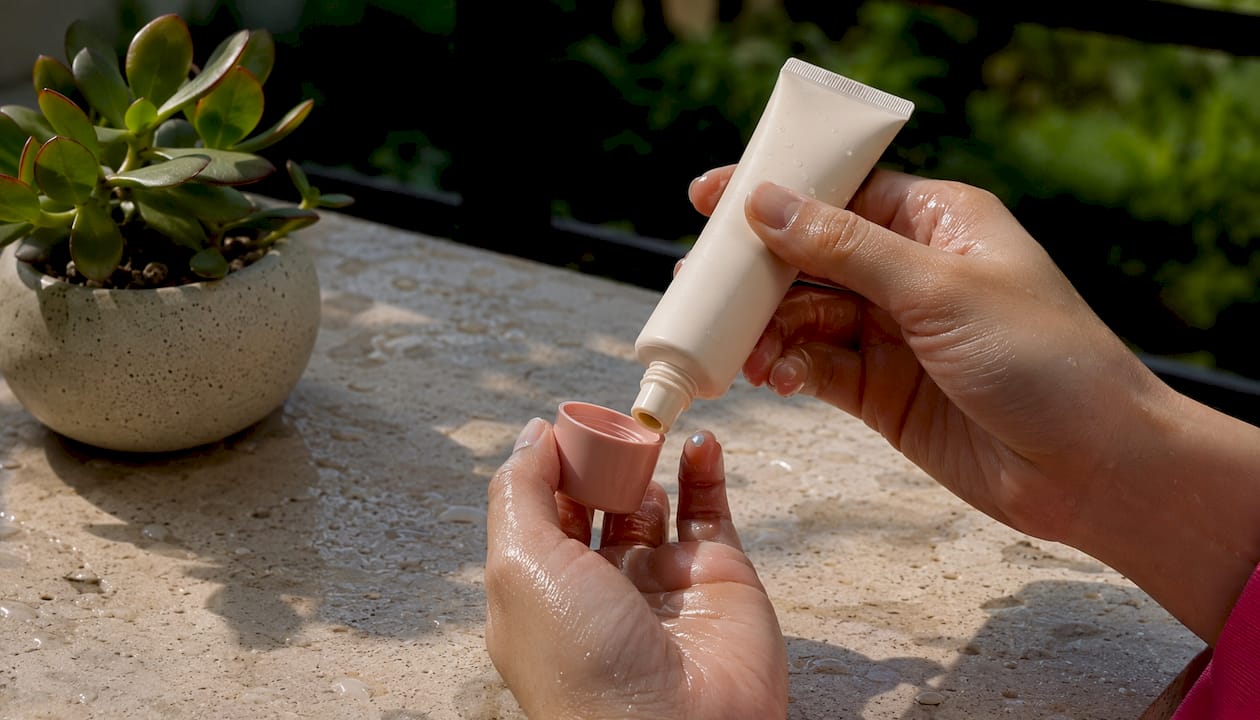
Dry and dehydrated skin benefits most from a cream or serum-type formula with hyaluronic acid, ceramides, or plant oils. ROUND LAB Birch Juice Moisturizing Sunscreen (SPF 50+ PA++++) is built around silver birch sap and hyaluronic acid for a soft, hydrated glow that doubles as a moisturizing base.
Sensitive and post-procedure skin calls for fragrance-free, minimal-ingredient formulas. Mineral filters (zinc oxide) or gentle chemical filters paired with centella asiatica, madecassoside, or panthenol are the safest bet. The Skin1004 Madagascar Centella Hyalu-Cica Water-Fit Sun Serum (SPF 50+ PA++++) is a standout here: lightweight, serum-textured, and soothing without a white cast.
Combination skin needs balance. A formula that hydrates dry zones without triggering shine in the T-zone is the goal. Purito SEOUL Daily Soft Touch Sunscreen (SPF 50+ PA++++) uses ceramides for moisture and centella for calm, with a matte finish that controls oilier areas.
Under-makeup and long-wear use demands a fast-absorbing, non-pilling formula. Fluid and serum textures win here. Beauty of Joseon Relief Sun: Rice + Probiotics (SPF 50+ PA++++) has become a benchmark for this category: its satin finish sits under foundation without budging.
Outdoor and active use requires water resistance and a formula that stays put through sweat. Look for "water-resistant" on the label and reapply every two hours regardless of claims.
| Skin Type / Use Case | Ideal Finish | Best Formulation Cues |
|---|---|---|
| Oily / acne-prone | Matte | Silica, gel or fluid, oil-free |
| Dry / dehydrated | Dewy | Cream or serum, HA, ceramides |
| Sensitive / post-procedure | Natural / no-cast | Fragrance-free, centella, mineral or gentle chemical |
| Combination | Matte to natural | Ceramides + centella, balanced texture |
| Under makeup / long-wear | Satin / natural | Fast-absorbing fluid or serum, no pilling |
| Outdoor / active | Any | Water-resistant, SPF 50+, reapply every 2 hours |
Pro Tip: In humid climates or during summer, a lightweight gel or fluid formula will feel far more comfortable than a cream. In dry or cold climates, a cream-based formula prevents that tight, stripped feeling after application.
How do you choose the best Korean sunscreen?
The single most useful rule: pick SPF 50+ and PA++++ for daily face use, and never drop below SPF 30 for any sun exposure. Everything else is about matching the formula to your skin and routine.
Protection metrics: SPF and PA
SPF measures UVB protection (the burning rays). PA++++ is the Korean rating for UVA protection, and it is the highest tier available. UVA rays drive photoaging and pigmentation, so a high PA rating matters as much as SPF for anti-aging goals. Broad-spectrum on a US-sold product means it covers both UVA and UVB.
Filter type and photostability
Korean sunscreens often use modern filters like Tinosorb S, Tinosorb M, and Uvinul A Plus (DHHB) that are not yet widely approved in the US market. These filters are more photostable, meaning they do not degrade as quickly under UV exposure. A photostable formula maintains its protection level throughout the day rather than fading after a few hours of sun. This is one practical reason a modern-filter K-beauty sunscreen can outperform many US drugstore options for daily wear under makeup.
Skincare actives to look for
The best K-beauty SPFs double as skincare. Niacinamide brightens and minimizes pores. Hyaluronic acid hydrates without heaviness. Centella asiatica calms redness and supports barrier repair. Panthenol and madecassoside soothe irritation. These are not marketing additions; they change how the formula feels and performs on skin.
Questions to ask while shopping
Before you add to cart, run through these: Does it have SPF 50+ and PA++++? Is the formula fragrance-free if your skin is reactive? Does the finish (matte, dewy, satin) match your skin type and makeup habits? Is the seller authorized and US-shipping directly?
Red flags to watch for
Fragrance and alcohol high on the ingredient list are a concern for sensitive skin. Buying from unverified third-party marketplace sellers carries a real counterfeit risk in the K-beauty market: a counterfeit sunscreen may list SPF 50+ on the label but deliver no meaningful protection. Always check for clear batch and expiry information on the packaging.
What format and texture should you choose?
The format you pick changes how the sunscreen fits into your routine more than almost any other factor.
- Gel and fluid: Absorb fast, feel weightless, and sit cleanly under makeup. Best for oily, combination, and acne-prone skin, and for humid climates. The Isntree Hyaluronic Acid Watery Sun Gel (SPF 50+) is a textbook example: a gel that layers niacinamide and a six-weight hyaluronic acid complex over modern photostable filters for a no-cast, no-grease finish.
- Cream: Richer texture, more hydrating, better for dry or mature skin. Works as a moisturizer-sunscreen hybrid. Slightly heavier under makeup but excellent as a standalone base.
- Serum: Thinnest consistency, often the most elegant under other products. Great for sensitive or post-procedure skin that needs actives without weight.
- Stick: Designed for reapplication over makeup. Swipe over foundation without disturbing it. The Abib Airy Sunstick Smoothing Bar (SPF 50+) is a strong option for on-the-go touch-ups.
- Cushion: Portable and makeup-friendly. Useful for midday reapplication, though coverage can be uneven if you rush the application.
Mineral vs. chemical filters
Chemical filters (like those in most K-beauty formulas) absorb UV rays and convert them to heat. They tend to be invisible on skin, making them ideal for darker skin tones and anyone who hates white cast. Mineral filters (zinc oxide, titanium dioxide) sit on top of skin and physically block UV rays. They are the better choice for sensitive skin, those with rosacea, pregnant individuals, and anyone concerned about reef safety. The trade-off is a thicker texture and a potential white cast, though many modern mineral K-beauty formulas have improved significantly on this front.
Packaging and travel notes
Pump bottles dispense a consistent amount and stay hygienic. Tubes are travel-friendly and easy to control. Sticks are TSA-approved and spill-proof. If you reapply during the day, a stick or cushion format is far more practical than carrying a full bottle.
What ingredients and filter differences should US shoppers know about?
Korean sunscreens often pair modern, photostable filters with active skincare ingredients, and that combination is the main reason they feel so different from most US drugstore SPFs.
The key skincare actives to recognize:
- Centella asiatica (also listed as cica, madecassoside, or asiaticoside): calms inflammation, supports barrier repair, and reduces redness. Particularly valuable for post-procedure or reactive skin.
- Hyaluronic acid: Draws water into the skin and plumps the surface. Multiple molecular weights (as in the Isntree gel) penetrate at different skin depths for layered hydration.
- Niacinamide: Brightens uneven tone, minimizes the appearance of pores, and strengthens the skin barrier. A workhorse ingredient in K-beauty SPFs.
- Panthenol and madecassoside: Both are calming and reparative. Panthenol (vitamin B5) locks in moisture; madecassoside is a centella-derived compound that reduces irritation.
On the filter gap between Korea and the US: Filters like Tinosorb S, Tinosorb M, and Uvinul A Plus are widely used in Korean and European sunscreens and offer stronger long-wave UVA coverage and better photostability than many older filters still common in the US market. The US FDA has not yet approved several of these modern filters, meaning US-formulated sunscreens are often limited to older actives. For US shoppers, this is a practical reason to seek out Korean-formulated SPFs from authorized retailers.
For US shoppers, the sourcing note is not a technicality. Counterfeit K-beauty products circulate on unverified marketplace listings, and a fake sunscreen offers no real protection regardless of what the label says. Stick to authorized retailers that ship directly from verified distribution channels. Thepicks ships Korean beauty products directly to US customers with creator-verified sourcing, which removes the guesswork.
How do you apply Korean sunscreen correctly?
Apply a nickel-to-quarter-sized amount for the face and reapply every two hours during sun exposure. That amount sounds like a lot, but most people apply far less than needed and get significantly less protection than the SPF label promises.
Morning routine: step by step
- Complete your skincare routine (cleanser, toner, serum, moisturizer if needed).
- Wait 60 seconds for your last skincare layer to absorb.
- Dispense a nickel-to-quarter-sized amount of sunscreen onto your fingertips.
- Dot across forehead, cheeks, nose, and chin, then blend outward with gentle pressing motions. Do not rub aggressively.
- Let the sunscreen set for 2–3 minutes before applying makeup. Rushing this step causes pilling.
- Apply primer or foundation over the set sunscreen using a damp sponge rather than fingers to avoid disturbing the SPF layer.
Reapplication during the day
Reapplication is where most routines fall apart. Two hours of direct sun exposure is the threshold, but even indoors near windows, UVA exposure accumulates. For reapplication over makeup, a sunscreen stick or cushion is the most practical option. Swipe the stick over your face in light, even strokes, then press gently with clean fingertips to blend. Avoid rubbing, which moves foundation and disrupts coverage.
For outdoor activities or workouts, a water-resistant formula applied before heading out is the baseline. Reapply after toweling off or heavy sweating, not just on a two-hour timer.
Pro Tip: After your sunscreen fully sets, a light dusting of setting powder controls shine without disrupting the SPF layer. This works especially well for oily skin types who find that sunscreen alone leaves a slightly dewy finish they want to tone down.
Why do dermatologists and creators keep recommending K-beauty SPF?
The short answer: cosmetic elegance. Korean sunscreens are preferred not just because they protect well, but because they are genuinely pleasant to wear every day, and daily wear is the only thing that actually matters for long-term skin health.
Board-certified dermatologist Dr. Marisa Garshick puts it plainly: K-beauty sunscreens are preferred for their cosmetic elegance, specifically the lightweight textures that absorb quickly and leave no white cast, which directly improves daily compliance. A sunscreen you skip because it feels heavy or looks chalky offers zero protection. The formula that disappears into your skin in 30 seconds is the one you will actually use.
Creator-scientist Michelle Wong of Lab Muffin makes a point worth repeating: there is no single best sunscreen for everyone. The right approach is to define your needs first (skin type, activity level, desired finish) and then cross-reference reviews. That is exactly the framework Thepicks uses to surface creator-tested picks by skin type, so you are not sorting through hundreds of options blind.
On the photostability side, a single modern-filter K-beauty daily sunscreen can offer more reliable wear under makeup throughout the day than many US drugstore formulas, because the filters themselves do not degrade as quickly under UV exposure. For anyone wearing sunscreen under foundation for eight or more hours, that stability difference is real.
One more thing worth flagging: counterfeit K-beauty products are a genuine problem on unverified marketplace listings. Buying from authorized US retailers is not just about authenticity; it is about getting the protection you paid for.
Key Takeaways
Korean sunscreens deliver better daily compliance because their cosmetic elegance, photostable modern filters, and built-in skincare actives make them genuinely easy to wear every day.
| Point | Details |
|---|---|
| Match to skin type and finish | Choose matte gels for oily skin, cream or serum formulas for dry, and fragrance-free options for sensitive skin. |
| Prioritize SPF 50+ and PA++++ | These are the daily-use benchmarks for both UVB and UVA protection in K-beauty sunscreens. |
| Modern filters outperform older US actives | Tinosorb S, Tinosorb M, and Uvinul A Plus offer stronger photostability and UVA coverage than many US-approved filters. |
| Buy from authorized US sellers | Counterfeit K-beauty sunscreens circulate on unverified marketplace listings and may offer no real SPF protection. |
| Thepicks for creator-tested picks | Thepicks ships creator-verified Korean sunscreens directly to US customers with ingredient breakdowns and skin-type filters. |
The case for cosmetic elegance as the deciding factor
The conventional wisdom in sunscreen shopping is to lead with SPF number. Pick the highest number, apply it, done. But that logic breaks down the moment you factor in real-world behavior. A sunscreen with SPF 100 that you skip because it pills under your foundation, or feels greasy by noon, or leaves a white cast on your skin tone, is functionally worse than an SPF 50+ formula you actually wear every day without thinking about it.
That is the real argument for K-beauty sunscreens, and it is not a marketing angle. The formulation philosophy in Korean skincare has always prioritized wearability alongside efficacy. The result is a category of products that feel like skincare first and sunscreen second, which is exactly what drives daily compliance.
For US shoppers, the sourcing piece is where the decision gets practical. The K-beauty market on unverified platforms carries real counterfeit risk, and a fake SPF 50+ product may offer no protection at all. Creator-tested, directly shipped options from a vetted platform remove that variable entirely. Thepicks was built specifically for this: every product on the platform has been reviewed by real beauty creators, and US shipping comes from verified channels.
Where to find creator-tested Korean sunscreens shipped to the US

Thepicks cuts through the noise by doing what most shopping platforms do not: every Korean sunscreen on the platform has been tested and reviewed by real beauty creators before it gets recommended to you. There are no unverified third-party listings, no counterfeit risk from gray-market imports, and no sorting through hundreds of options with no context. Creator reviews come with ingredient callouts, skin-type notes, and honest wear assessments so you know exactly what you are buying before it ships.
For US shoppers, direct shipping from verified distribution channels means the formula you receive matches what the creator tested. Browse creator-curated K-beauty picks by skin type, finish, or use case, and check out individual creator shelves for picks from people whose skin type matches yours. If you want a starting point, Marissa Miller's picks and Cindy Nguyen's picks are strong places to begin for daily-wear and under-makeup recommendations.
Useful sources and further reading
- 17 Best Korean Sunscreens, According to Dermatologists (CNN Underscored): Dermatologist-backed roundup covering sensitive and acne-prone skin picks, including the Skin1004 Centella Sun Serum.
- The 7 Best Korean Sunscreens of 2026, Tested and Reviewed (Byrdie): Editorial testing across skin types with dermatologist input from Dr. Marisa Garshick; useful for cosmetic elegance and wear-under-makeup claims.
- Top Korean Sunscreens (Lab Muffin Beauty Science): Creator-scientist Michelle Wong's needs-first framework for choosing K-beauty SPF; the most rigorous formulation-level analysis available.
- Isntree Hyaluronic Acid Watery Sun Gel SPF 50+ Review (DermApproved): Detailed filter breakdown covering Tinosorb S, Tinosorb M, and Uvinul A Plus; essential reading for understanding modern filter advantages.
- Best Korean Sunscreens (Allure): Covers counterfeit risk and authorized sourcing guidance for US shoppers.
- Thepicks — Creator-Curated K-Beauty Picks: The practical next step for US shoppers: creator-tested Korean sunscreens with direct US shipping and skin-type filters.
This article is general information, not medical or dermatological advice. Confirm current product formulations and regulatory status with the manufacturer or a board-certified dermatologist for your specific skin concerns.