
YouTube is the leading discovery channel for K-beauty skincare and makeup among young women in the US, accounting for 31.4% of initial skincare awareness and 38.3% for makeup in 2026. Those numbers are not a coincidence. The role of YouTube in K-beauty discovery comes down to one thing that no other platform replicates at scale: long-form, trust-building education. Creators on YouTube do not just show products. They explain ingredients, demonstrate application techniques, and build the kind of credibility that turns a curious viewer into a confident buyer.
How YouTube influencers shape K-beauty discovery and consumer trust
The influencer ecosystem on YouTube for K-beauty is more layered than most people realize. Creators fall into two broad types: technical educators who break down ingredient science and skin barrier health, and lifestyle mentors who weave K-beauty into their daily routines. Both types serve a real function. Technical educators attract viewers who want to know why a product works. Lifestyle mentors attract viewers who want to see how it fits into real life.
The most significant shift in 2026 is the move toward what the YouTube beauty community calls "Slow-aging" and "Skintelligence" content. Creators are no longer just reviewing the latest toner. They are teaching viewers how to read ingredient lists, understand skin barrier function, and build routines that prioritize long-term skin health over short-term glow. That depth is what separates YouTube from every other platform.
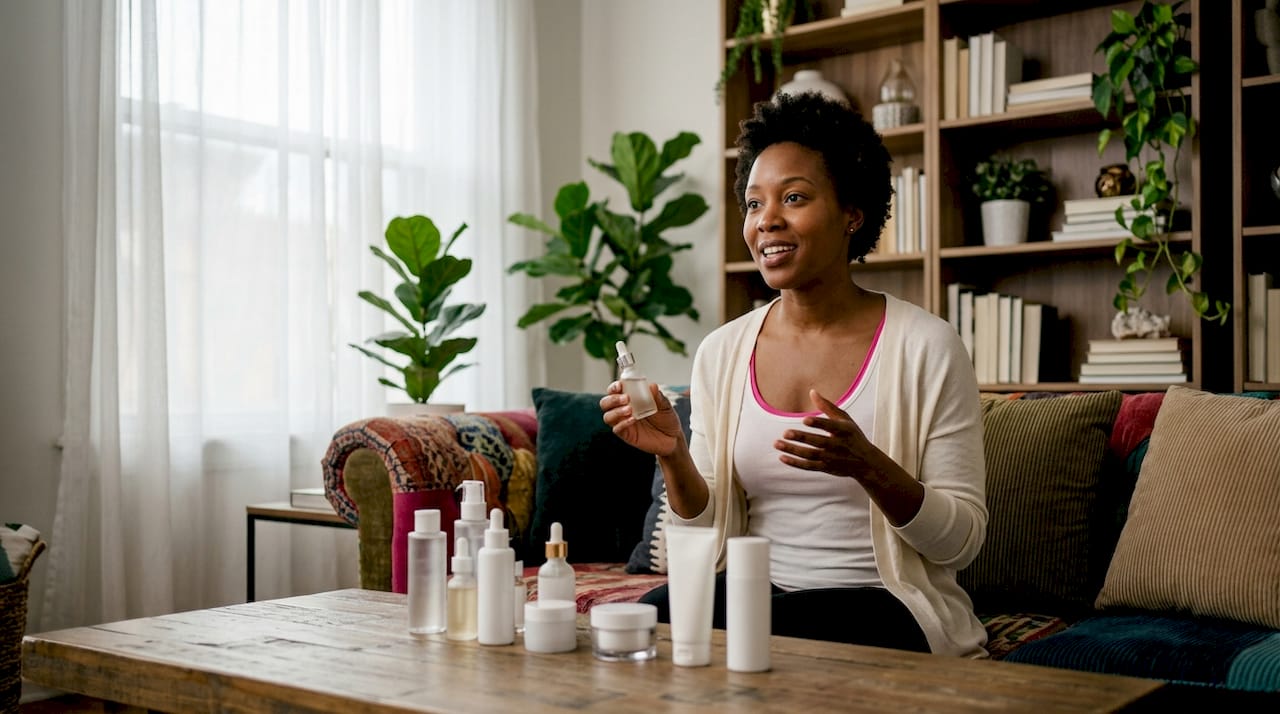
Authenticity is the currency that keeps viewers coming back. Ingredient-focused videos reduce the mistrust that often comes with sponsored content. Viewers can tell the difference between a creator who genuinely understands a formula and one who is reading from a brand brief. When a creator explains why a niacinamide serum works for hyperpigmentation before mentioning the brand, the recommendation lands differently. That context is what builds the creator trust that drives real purchase decisions.
Multi-video series also play a major role. A creator who covers a product in a first-impressions video, a 30-day update, and a final verdict gives viewers a timeline of real results. That format is nearly impossible to replicate on Instagram or TikTok, and it is exactly why YouTube holds such a dominant position in the K-beauty discovery process.
Pro Tip: When evaluating a creator's recommendation, check whether they have covered the product across multiple videos over time. A single sponsored post tells you very little. A 30-day follow-up tells you almost everything.
Why is YouTube more effective for K-beauty discovery than other platforms?
The honest answer is format. Instagram surfaces aesthetics. TikTok delivers 60-second impressions. YouTube delivers the full picture.
A K-beauty tutorial video on YouTube can run 15 to 25 minutes and cover ingredient breakdowns, skin type suitability, application order, and real-skin results. That depth is not possible on short-form platforms. Instagram acts as a discovery surface, but YouTube builds the long-form trust that actually converts viewers into buyers. The two platforms work together, but they serve different stages of the decision process.
The table below shows how each platform functions in the K-beauty discovery journey.
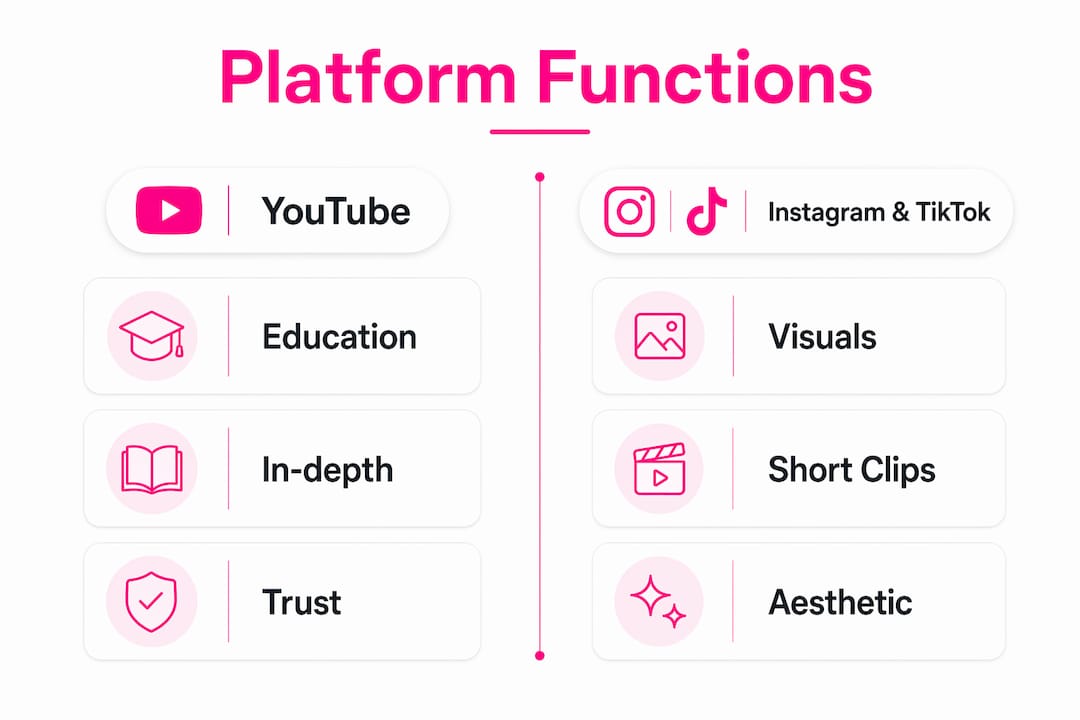
| Platform | Primary function | Content depth | Trust-building capacity |
|---|---|---|---|
| YouTube | Education and discovery | High (long-form tutorials) | High |
| Visual discovery and trend signals | Low to medium (reels, posts) | Medium | |
| TikTok | Trend amplification | Low (short clips) | Low to medium |
| Naver Blog | Purchase verification | Medium (written reviews) | High |
The purchase journey for most K-beauty shoppers follows a clear pattern. They discover a product on YouTube, get curious, then verify it through retail-integrated platforms. Olive Young reviews drive 4–7 times higher conversion than Instagram or general social media. That stat reveals something important: YouTube starts the conversation, but retail platforms close it. Knowing this helps you use both channels more intentionally.
YouTube also integrates naturally with Korean retail ecosystems. Creators frequently link directly to product pages on platforms like Olive Young or Naver Shopping in their video descriptions. That connection between content and commerce shortens the path from "I want to try this" to "I just ordered it."
What 2026 K-beauty trends are YouTube creators validating right now?
The biggest trend reshaping K-beauty content in 2026 is Skin Streaming. The concept is straightforward: replace a 10-step routine with 2–3 multifunctional products that do the work of many. YouTube creators like Minsco have been central to validating this shift, showing viewers how a well-chosen essence, moisturizer, and SPF can outperform a cluttered 10-step lineup.
This trend matters because it changes what K-beauty tutorial videos look like. Instead of haul videos stacked with 15 products, creators are now producing focused, ingredient-driven content around a handful of hero items. That shift benefits viewers who felt overwhelmed by the complexity of traditional K-beauty routines.
Here is what the current wave of YouTube K-beauty content is covering most heavily:
- Skin Streaming routines: Minimalist, multifunctional product stacks replacing multi-step systems
- Bloom skin aesthetics: Dewy, translucent skin achieved through barrier-focused care rather than heavy coverage
- Slow-aging education: Long-term skin health over quick fixes, with creators explaining collagen, ceramides, and peptides in plain language
- Ingredient literacy: Videos that teach viewers to read Korean labels and understand what actives actually do
- Fast-pivot product reviews: Creators responding to rapid K-beauty innovation cycles by reviewing new launches within days of release
The speed of this cycle is worth noting. YouTube comments and engagement metrics feed directly back into K-beauty brand R&D. Brands watch what creators and their audiences respond to, then pivot product development accordingly. A trend validated on YouTube can prompt a brand to reformulate or repackage within months. That feedback loop is unique to the platform.
Pro Tip: Follow creators who post ingredient-focused content rather than haul videos. They tend to be more selective, which means their recommendations carry more weight and save you money in the long run.
How can you use YouTube to find authentic K-beauty products?
Finding genuinely useful K-beauty content on YouTube takes a little strategy. The platform is large, and not all content is created equal. A few clear signals separate credible creators from hype-driven ones.
- Check for ingredient analysis. Credible creators explain what is in a product and why it matters for specific skin concerns. If a video only shows texture and packaging, move on.
- Look for long-term follow-ups. First-impression videos are useful, but 30-day or 60-day updates show real results. Prioritize creators who revisit products after extended use.
- Read the disclosure section. Sponsored content is not automatically bad, but context-rich educational content maintains trust even when paid. If a creator explains the science behind a sponsored product rather than just praising it, that is a good sign.
- Cross-reference with retail reviews. After finding a product on YouTube, check its reviews on retail platforms for purchase verification. The combination of YouTube education and retail social proof gives you the most complete picture.
- Explore creator-curated shelves. Many YouTube creators now maintain curated product lists tied to shopping platforms. These shelves reflect products they have actually tested, not just products they were sent. Platforms like Thepicks organize these creator-endorsed picks so you can shop directly from a creator's trusted selections.
Understanding K-beauty review formats also helps. A "first impressions" video, a "routine integration" video, and a "long-term results" video each tell you something different. Watching all three for a product you are considering gives you a much clearer picture than any single review.
Key Takeaways
YouTube dominates K-beauty discovery because its long-form format builds the ingredient literacy and creator trust that short-form platforms cannot replicate at the same depth.
| Point | Details |
|---|---|
| YouTube leads awareness | YouTube drives 31.4% of skincare and 38.3% of makeup initial awareness in 2026. |
| Ingredient content builds trust | Videos explaining ingredient science reduce sponsorship-related mistrust and drive higher engagement. |
| Skin Streaming is the top trend | Creators like Minsco are validating the shift from 10-step routines to 2–3 multifunctional products. |
| Discovery and purchase are separate steps | YouTube starts the journey; retail platforms like Olive Young close it with 4–7× higher conversion. |
| Creator shelves connect content to commerce | Curated creator picks on platforms like Thepicks let you shop directly from trusted YouTube recommendations. |
YouTube changed how I think about beauty recommendations
I used to treat YouTube beauty content the same way I treated magazine ads: pretty to look at, not particularly useful for real decisions. That changed when I started paying attention to which creators actually explained why they were recommending something. The ones who broke down ceramide concentrations or explained why a particular pH matters for an exfoliant were not just more interesting. They were more right, more often.
The shift toward Skintelligence content in 2026 has made this even more pronounced. Creators who once posted weekly haul videos are now posting monthly deep dives into one or two products. That slowdown is actually a quality signal. It means they are spending more time with each product before recommending it to their audience.
One thing I tell anyone new to K-beauty: do not start with a creator who posts every day. Start with one who posts every two weeks and always includes a follow-up. The slower cadence usually means more genuine testing. And when you find a creator whose skin type and concerns match yours, their recommendations become almost as reliable as a dermatologist's suggestion. That is not an exaggeration. It is just what happens when education replaces entertainment as the primary goal.
— Minwoong
Trusted K-beauty picks from the creators you already watch
Thepicks connects you directly to K-beauty products that YouTube creators have actually tested and reviewed. Every item on the platform comes with a creator's honest assessment, so you skip the guesswork of sorting through hundreds of videos. You can browse creator-curated shelves organized by the people whose content you already trust, from skincare-focused educators to routine-building lifestyle creators. If you are new to K-beauty and want a starting point, Haley Gansel's picks offer a well-edited selection of products that work across a range of skin types. Thepicks ships directly to US addresses, so the path from YouTube discovery to your bathroom shelf is shorter than ever.
FAQ
What percentage of K-beauty discovery happens on YouTube?
YouTube accounts for 31.4% of initial skincare awareness and 38.3% of makeup awareness among K-beauty shoppers in 2026, making it the top discovery channel ahead of Instagram and TikTok.
How do YouTube creators build trust in K-beauty reviews?
Creators build trust by combining ingredient education with long-term product testing. Videos that explain the science behind a formula reduce the skepticism that comes with sponsored content.
What is Skin Streaming and why is YouTube spreading it?
Skin Streaming is a 2026 K-beauty trend that replaces 10-step routines with 2–3 multifunctional products. YouTube creators like Minsco validated the trend through tutorial content, and brands are now pivoting their product lines in response.
Should I trust sponsored K-beauty content on YouTube?
Sponsored content is worth watching when the creator provides ingredient context and follows up with long-term results. Context-rich educational videos maintain viewer trust even when a brand partnership is involved.
How do I go from YouTube discovery to actually buying a K-beauty product?
Watch the YouTube tutorial for education, then verify the product through retail platform reviews before purchasing. Platforms like Thepicks also let you shop directly from creator-curated shelves, which shortens the path from discovery to purchase.