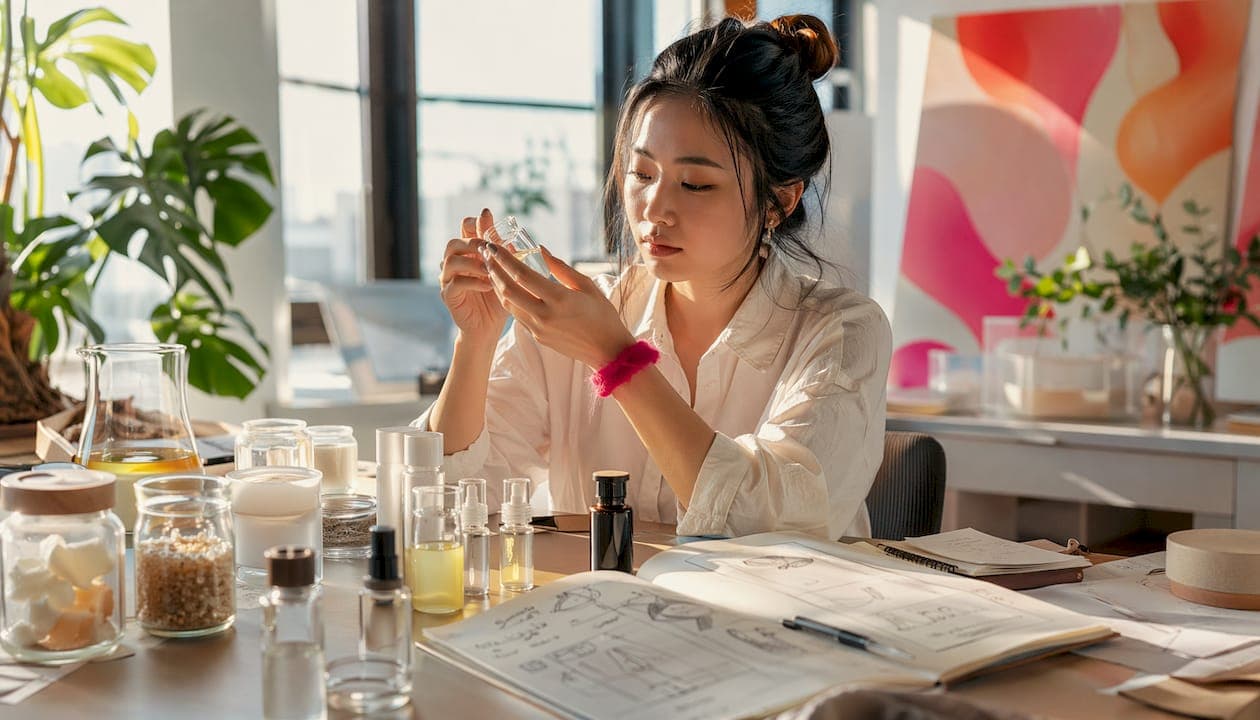
K-beauty innovation is the rapid, consumer-driven advancement of skincare products powered by South Korea's unique combination of ODM manufacturing, cultural influence, and social media feedback loops. The Korean beauty market is valued at around $13 billion with over 30,000 distinct brands competing for attention. That density forces constant reinvention. South Korea became the world's second-largest beauty product exporter by mid-2025, behind only the US. For beauty enthusiasts trying to understand what separates K-beauty from everything else, the answer starts in the factory, not the marketing department.
What is K-beauty innovation and how does it work?
K-beauty innovation is defined by speed, ingredient creativity, and a system where manufacturers, brands, and consumers all shape the final product. The industry term for this approach is consumer-integrated product development, and it runs on a model most Western brands have never adopted at scale.
Korean brands bring new products from concept to shelf in just 4–6 months. Western brands typically take 1–3 years to complete the same process. That gap is not accidental. It reflects a fundamentally different industrial structure built around speed and iteration.
How does South Korea's manufacturing ecosystem enable rapid product cycles?
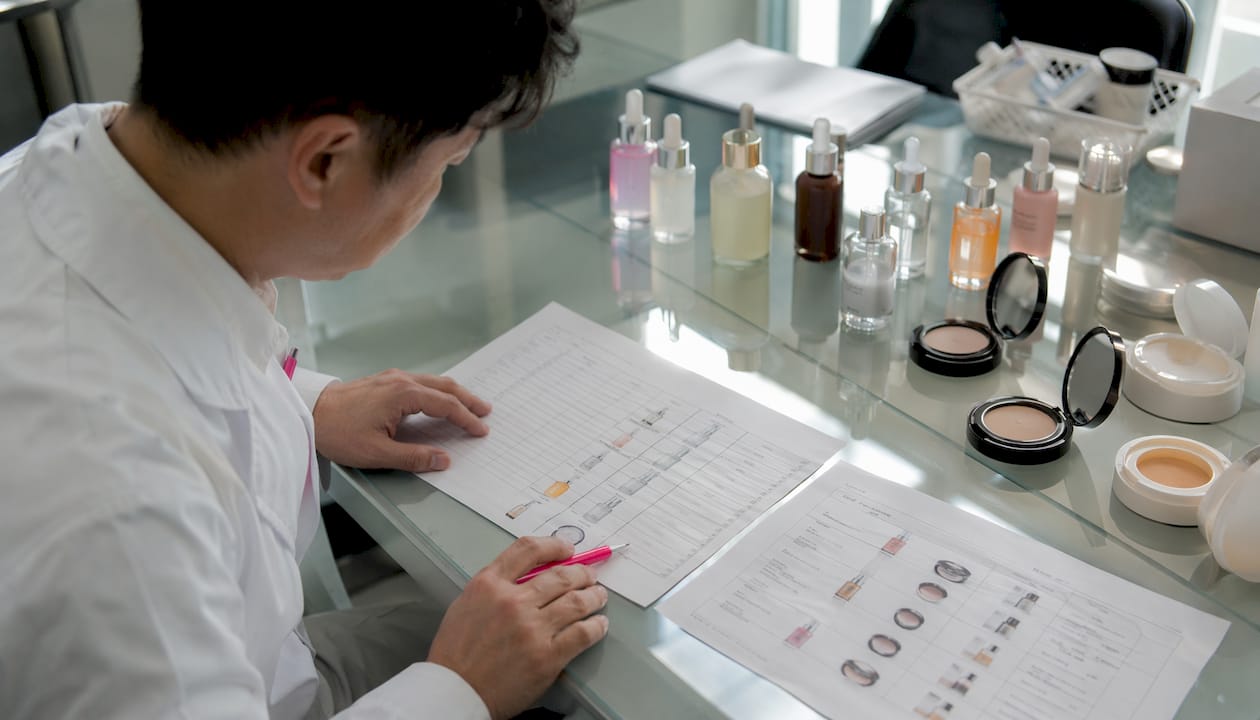
The engine behind K-beauty's speed is the ODM model, which stands for Original Development Manufacturing. ODM manufacturers handle research, formulation, and production entirely in-house. Brands stay asset-light and focus on marketing, positioning, and consumer engagement instead of building labs.
This structure clusters suppliers, chemists, and packaging producers near Seoul. The geographic concentration cuts weeks off logistics and coordination. A brand can receive consumer feedback on a serum in january and have a reformulated version in production by march.
Korean brands launch 10–20 new products per year on average. Western brands typically launch 3–5. That volume is only possible because the ODM system absorbs the R&D burden.
Key advantages of the ODM manufacturing model:
- Speed: Formulation and production happen under one roof, removing handoff delays.
- Flexibility: Brands can request reformulations mid-cycle without rebuilding supplier relationships.
- Cost efficiency: Shared infrastructure lowers the barrier for indie brands to enter the market.
- Scale: Manufacturers serve multiple brands simultaneously, spreading fixed costs.
Pro Tip: If you spot a K-beauty product that sold out and relaunched with a new formula within months, that is the ODM system working exactly as designed. Brands treat early batches as live tests, not finished products.
What unique formats and ingredients define K-beauty products?
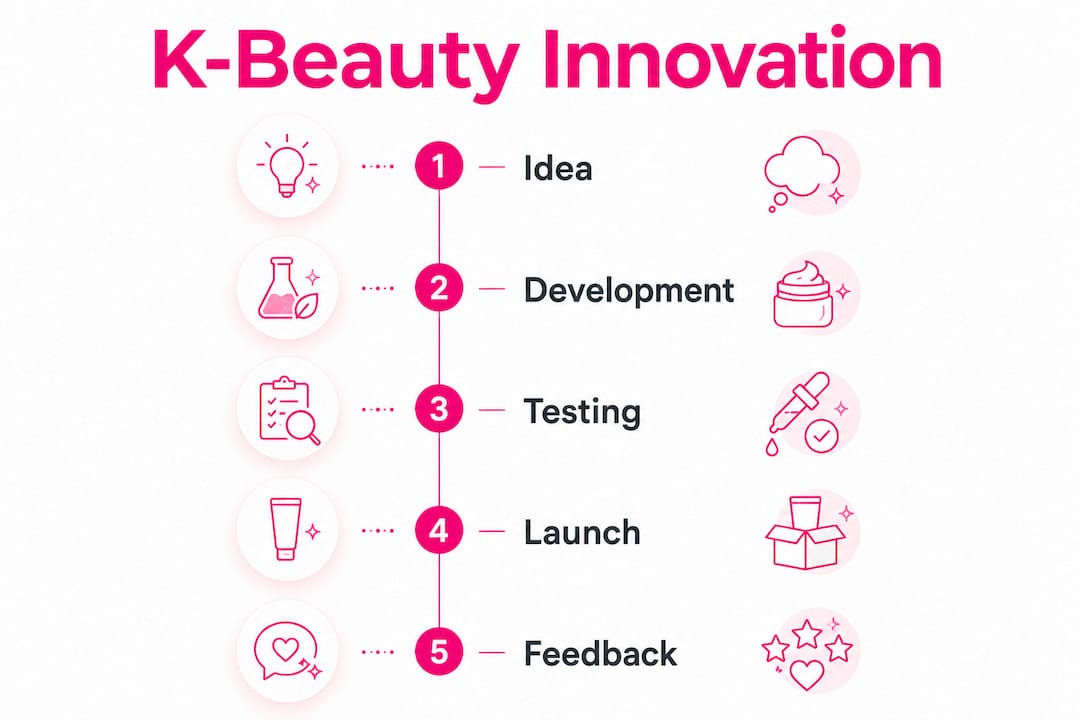
K-beauty products are defined by hybrid formats and ingredient transparency. BB creams and cushion compacts are the most recognized examples. Both products blend skincare benefits with makeup coverage in a single step, a concept that did not exist in Western beauty before K-beauty exported it globally.
Ingredients like snail mucin, centella asiatica, PDRN (polynucleotide), and biomimetic lipids appear in K-beauty formulas years before Western brands adopt them. Centella asiatica, for example, was a niche wound-healing botanical before Korean brands built entire product lines around its barrier-repair properties. PDRN, derived from salmon DNA, now appears in premium serums targeting skin regeneration.
K-beauty also emphasizes ingredient transparency, listing actives like hyaluronic acid, niacinamide, and centella asiatica prominently on packaging. That transparency educates shoppers and builds loyalty faster than vague "proprietary blend" labeling.
| Feature | Traditional Western Products | K-Beauty Products |
|---|---|---|
| Product format | Single-function (moisturizer or SPF) | Hybrid (moisturizer + SPF + serum) |
| Ingredient labeling | Often vague or proprietary | Specific actives named clearly |
| Development cycle | 1–3 years | 4–6 months |
| Packaging role | Functional container | Education and experience tool |
| Texture variety | Limited | Gel, essence, jelly, cushion, balm |
Packaging in K-beauty serves as a communication tool, not just a container. Dropper bottles signal serum concentration. Cushion puffs communicate buildable coverage. The format itself teaches the shopper how to use the product before they read a word of copy.
Pro Tip: When trying a new K-beauty product, pay attention to the texture before anything else. Texture is intentional. A watery essence absorbs before a gel moisturizer, and that layering sequence is the routine.
How does culture and social media accelerate K-beauty's global reach?
K-beauty's global spread is inseparable from the Hallyu wave, the broader export of Korean culture through music, film, and television. When audiences worldwide watched Korean dramas and noticed the skin quality of the actors, they searched for the products behind it. That curiosity created a ready audience for K-beauty brands before those brands spent a dollar on international advertising.
TikTok and YouTube now function as the primary launch platforms for K-beauty trends. A creator demonstrating a snail mucin serum's texture on camera generates more purchase intent than a traditional print ad. The product becomes content. The routine becomes a story.
"The success of K-beauty lies in treating skincare as shareable content, where texture, packaging, and usage become media and alter the customer's buying experience entirely."
Beauty creators shape K-beauty trends in real time, and brands monitor that content as a feedback signal. If a product's texture photographs poorly or a formula causes breakouts for multiple creators, the brand knows within weeks. That social listening loop feeds directly back into the ODM reformulation cycle.
Pro Tip: Follow creators who show full routines, not just single product reviews. Routine context tells you how a product performs in combination, which is how K-beauty is designed to be used.
What distinguishes K-beauty innovation from J-beauty and Western beauty?
K-beauty and J-beauty share a commitment to skin health, but their philosophies diverge sharply. K-beauty is trend-driven and uses fast-acting acids and layered actives to deliver visible results quickly. J-beauty prioritizes barrier function and long-term skin conditioning, favoring fewer products applied consistently over years.
Western beauty brands historically led with clinical claims and dermatologist endorsements. K-beauty leads with texture, experience, and community. That is not a superficial difference. It reflects a different theory of how consumers build trust with a product.
| Dimension | K-Beauty | J-Beauty | Western Beauty |
|---|---|---|---|
| Core philosophy | Trend-responsive, layered actives | Barrier-first, minimalist | Clinical efficacy, dermatologist-led |
| Product cycle | 4–6 months | 1–2 years | 1–3 years |
| Routine structure | Flexible, mix-and-match | Fixed, minimal steps | Prescribed by skin type |
| Innovation driver | Consumer feedback and social media | Craft and heritage | Lab research and clinical trials |
| Texture focus | High (essence, jelly, gel) | Moderate | Low to moderate |
The key distinction is not quality. J-beauty products are exceptionally well-made. The difference is the innovation model. K-beauty treats the consumer as a co-creator. J-beauty treats the formula as the authority. Western beauty treats the dermatologist as the authority. All three produce results, but K-beauty iterates fastest.
How can you apply K-beauty principles to your own skincare routine?
K-beauty routines are flexible and customized, built around daily skin needs rather than a fixed sequence. The famous 10-step routine was always a framework, not a prescription. Most Korean consumers use 4–6 products on a given day, adjusting based on weather, stress, and skin condition.
Here is a practical way to build a K-beauty-inspired routine:
- Start with one hybrid product. A cushion compact or a tinted sunscreen replaces two steps immediately. Simplify before you add.
- Add one active ingredient at a time. Introduce niacinamide or centella asiatica as a single serum. Track your skin's response for two weeks before layering another active.
- Prioritize barrier support. Look for products containing ceramides, biomimetic lipids, or panthenol. These ingredients appear on K-beauty labels clearly and are easy to identify.
- Use texture as a guide. Apply products from thinnest to thickest consistency. Essence before serum, serum before moisturizer.
- Follow creators for real-world testing. YouTube shapes K-beauty discovery in ways no brand campaign can replicate. Watching a creator use a product in their actual routine tells you more than ingredient lists alone.
Pro Tip: Do not add a trending ingredient just because it is popular. Check whether it addresses a specific concern you have, like redness, dryness, or uneven texture. K-beauty philosophy is about skin-specific choices, not collecting products.
Key Takeaways
K-beauty innovation works because South Korea's ODM manufacturing model, consumer feedback loops, and social media culture combine to produce faster, more responsive product development than any other beauty market.
| Point | Details |
|---|---|
| Speed is structural | Korean brands move from concept to shelf in 4–6 months because ODM manufacturers handle R&D and production together. |
| Ingredients are transparent | K-beauty labels actives like niacinamide and centella asiatica clearly, helping shoppers make informed choices. |
| Routines are flexible | The 10-step routine is a framework. Most Korean consumers use 4–6 products daily, adjusted to skin needs. |
| Social media drives iteration | Consumer content on TikTok and YouTube feeds back into reformulation cycles, making shoppers co-creators. |
| K-beauty vs J-beauty | K-beauty is trend-responsive with layered actives; J-beauty is barrier-focused and minimalist by design. |
Why K-beauty's innovation model is the one worth watching
I have followed beauty trends long enough to see cycles repeat. Ingredients go viral, brands chase them, and the market floods with mediocre versions of whatever worked. K-beauty does something different, and I think most people miss why.
The real advantage is not the ingredients or the textures. It is the feedback architecture. Because ODM manufacturers can reformulate in weeks and brands can monitor social content in real time, the system self-corrects faster than any other model in the industry. A bad formula does not survive long. A great texture gets iterated into three product extensions within a year.
What concerns me is sustainability. Launching 10–20 products per year generates packaging waste and creates pressure to trend-chase rather than build genuinely better formulas. The brands I trust most are the ones using that speed to improve, not just to fill shelves.
The lesson for beauty enthusiasts is this: use K-beauty's ingredient transparency and flexible routine philosophy as your guide, but do not feel obligated to follow every trend. The system produces great products and disposable ones in equal measure. Your job is to know the difference.
— Minwoong
K-beauty products worth trying, curated by real creators
Knowing what K-beauty innovation means is one thing. Finding products that actually deliver on that promise is harder, especially when the market has over 30,000 brands competing for your attention.

Thepicks solves that problem directly. Every product on the platform is tested and reviewed by beauty creators before it reaches US shoppers. You get the speed and ingredient creativity of K-beauty without the guesswork of sorting through thousands of options alone. Browse creator-tested picks to find serums, essences, and hybrid formulas that real people have used and vouched for. If you want a starting point, check out the EWG Verified Set from varuza, which reflects K-beauty's commitment to ingredient transparency with safety-vetted formulas shipped directly to the US.
FAQ
What is K-beauty innovation in simple terms?
K-beauty innovation is the process of developing new skincare products faster and with more consumer input than traditional Western brands. It relies on ODM manufacturing, social media feedback, and flexible ingredient combinations to bring new formulas to market in 4–6 months.
How does K-beauty differ from J-beauty?
K-beauty is trend-driven and uses layered actives for quick visible results, while J-beauty focuses on barrier protection and long-term skin conditioning with fewer products. The two philosophies produce different routines and different product formats.
What ingredients are central to K-beauty products?
Snail mucin, centella asiatica, niacinamide, hyaluronic acid, PDRN, and biomimetic lipids are the most recognized K-beauty actives. These ingredients appear clearly labeled on packaging, reflecting the industry's emphasis on ingredient transparency.
Is the 10-step K-beauty routine necessary?
The 10-step routine is an educational framework, not a daily requirement. Most Korean consumers use 4–6 products per day, adjusting their routine based on skin condition, season, and environment.
Why does K-beauty spread so fast globally?
Social media platforms like TikTok and YouTube amplify K-beauty trends by turning product textures, routines, and results into shareable content. The Hallyu wave of Korean cultural exports created a global audience already curious about Korean beauty standards before brands began formal international marketing.