
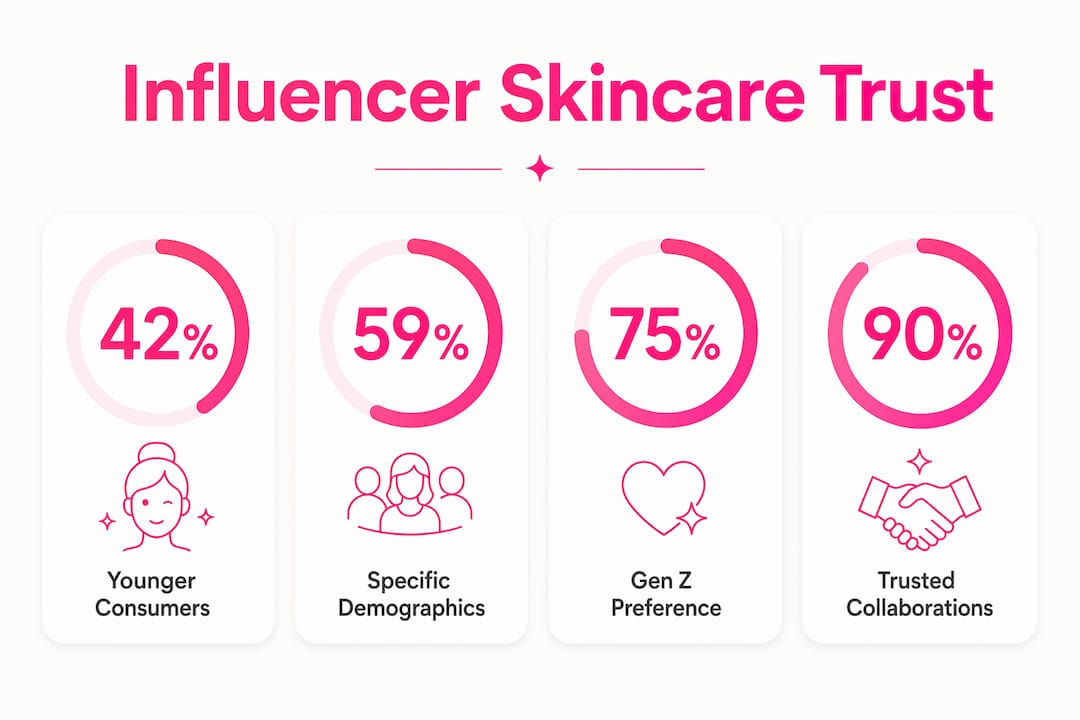
Influencer skincare credibility is defined by transparency, educational depth, and alignment with expert guidance, not by follower count or viral reach. The question of why trust influencer skincare reviews matters more than ever in 2026, as the beauty industry sees a clear shift away from hype-driven content toward evidence-backed recommendations. Between 42% and 59% of certain consumer groups rely on influencers for skincare guidance, drawn by relatable lived experience rather than clinical detachment. Knowing how to read that trust, and when to question it, is the skill every skincare shopper needs right now.
Why trust influencer skincare reviews at all?
Influencer skincare reviews earn trust through relatability, not authority. A dermatologist explains mechanisms. An influencer shows you what a product actually looks like on skin that resembles yours, in lighting that resembles your bathroom, after a routine that resembles your budget. That gap between clinical knowledge and daily practice is exactly where influencer content lives.
The numbers reflect this dynamic. 42%–59% of consumers in specific demographics turn to influencers for skincare guidance because of that lived-experience connection. This is not blind trust. It is a rational response to content that speaks directly to their skin concerns, skin tones, and daily habits.

Storytelling also plays a measurable role. Influencers who document a skincare routine over weeks, showing texture changes, breakouts, and gradual improvement, give viewers a realistic timeline. That narrative structure builds confidence in a way that a product ingredient list never could. The best influencer content functions as a peer recommendation at scale.
Sponsorship disclosure matters here too. When an influencer clearly labels a paid partnership and still discusses a product's drawbacks, that honesty signals credibility. Readers who see that disclosure and a balanced review are getting more useful information than they would from an anonymous five-star rating.
Pro Tip: Look for influencers who show their skin on camera without filters during product reviews. Unfiltered footage is one of the clearest signals of honest content.
- Relatability beats clinical language for everyday skincare decisions
- Documented routines over time give realistic expectations
- Disclosed sponsorships paired with balanced reviews signal genuine credibility
- Peer-scale storytelling fills the gap between ingredient science and daily practice
What are the limitations of relying solely on influencer skincare reviews?
Influencer reviews carry real risks when treated as prescriptive advice rather than discovery tools. The most significant risk is missing clinical context. Influencer-led routines often lack critical information like skin type specifics, medical history, or ingredient interaction warnings. A routine that clears acne for one person can trigger a reaction in someone with rosacea.
Misinformation spreads fast in beauty content because engagement algorithms reward drama and visible results, not accuracy. A video showing dramatic skin transformation in 30 days gets more views than a nuanced explanation of why that transformation may not apply to most viewers. Dermatologists advise treating influencer content as inspiration, not medical guidance, precisely because clinical accuracy is often sacrificed for engagement.
Undisclosed incentives are another real problem. Not every paid relationship gets labeled. Some influencers receive free products, trips, or affiliate commissions without clear disclosure. That financial relationship shapes what gets reviewed and how positively it gets framed.
Watch for these warning signs in influencer skincare content:
- No mention of skin type, sensitivity, or prior reactions
- Claims that a product "works for everyone" or produces results in days
- No disclosure of sponsorship, gifting, or affiliate links
- Reviews that never mention a single downside or trade-off
- Before-and-after photos with dramatic lighting or filter changes
Interestingly, nearly 75% of Gen Z consumers now prioritize customer reviews over influencer endorsements when making purchase decisions. That shift reflects growing awareness that influencer content, however relatable, carries commercial interests that customer reviews typically do not.
How do expert collaborations improve influencer skincare credibility?
The most credible influencer skincare content in 2026 involves dermatologists, not just products. When an influencer partners with a board-certified dermatologist to explain why a retinol serum causes initial purging, or how a niacinamide formula interacts with vitamin C, the content crosses from entertainment into education. That combination is where trust in beauty content is growing fastest.
Transparency about professional care is equally important. An influencer who discloses that their clear skin results from a combination of a topical product and professional treatments, such as chemical peels or laser sessions, gives viewers an honest picture. Disclosure of dermatological treatments correlates directly with higher viewer trust, because it removes the implication that a single product did all the work.
Here is how the best influencer-expert collaborations are structured in practice:
- The dermatologist explains the science. The influencer translates it into plain language and shows application on real skin.
- The influencer documents their full routine. The dermatologist flags which steps are clinically supported and which are personal preference.
- Both parties disclose the relationship clearly. Viewers know whether the collaboration is paid, gifted, or organic.
- Product limitations get named. The content acknowledges that results vary by skin type, age, and existing conditions.
- Follow-up content addresses viewer questions. This ongoing dialogue builds community trust over time.
Influencers who prioritize transparency and expert collaboration consistently maintain higher trust ratings than those who rely on follower count alone. The metric that matters is not reach. It is the quality of information delivered.
What practical strategies help you evaluate influencer skincare reviews?
Treating influencer reviews as a starting point, not a final answer, is the most useful frame for any skincare shopper. The goal is to use influencer content for discovery and then verify with additional sources before spending money or changing your routine.
Check for skin type alignment
Filtering reviews by skin type is one of the most practical steps you can take. A 4.6-star average rating means little if most reviewers have oily skin and yours is dry and sensitive. Look for influencers who explicitly state their skin type, concerns, and how long they tested the product.
Look for balanced, honest assessments
Reviews that mention downsides are more useful than purely positive ones. Texture issues, initial irritation, scent complaints, and packaging problems all help you assess whether a product fits your lifestyle. An influencer who only praises a product is either not testing it thoroughly or has a financial reason to stay positive.
Match the review context to your own situation
| What to check | Why it matters |
|---|---|
| Skin type and tone | Results vary significantly across different skin profiles |
| Climate and environment | Humidity and pollution affect how products perform |
| Routine compatibility | Some actives conflict with products you already use |
| Testing duration | Short-term reviews miss long-term reactions or benefits |
| Disclosure status | Paid reviews may omit negatives; organic reviews tend to be more candid |
Use influencer content as a discovery tool
Influencer reviews work best as a filter for narrowing down options, not as a prescription for your skin. Once an influencer points you toward a product category or ingredient, cross-reference with dermatologist-approved sources or customer reviews from people with similar skin profiles.
Pro Tip: Search the influencer's name plus "long-term review" or "update" to find follow-up content. Many initial reviews are positive; the six-month update tells a more complete story.
My honest read on influencer skincare trust in 2026
I have spent years watching the beauty content space shift, and the change happening right now is the most significant one yet. Influencers who built audiences on aspirational skin are losing ground to creators who show real skin, real reactions, and real dermatologist conversations on camera.
The readers who get the most value from influencer content are the ones who treat it like a well-informed friend's recommendation, useful, personal, and worth considering, but not the final word. Your skin has a medical history that no influencer knows. Your routine has variables no 10-minute video can account for.
What I find genuinely useful is the discovery function. Influencers surface products and ingredients that would take hours of research to find independently. Thepicks does this well by curating creator picks that are actually tested and reviewed, which removes a layer of guesswork from the process. But even then, the next step is always your own skin's response.
The influencers worth following in 2026 are the ones who say "this worked for me, here is why it might not work for you." That sentence is the clearest signal of credibility I know.
— Minwoong
Trusted skincare picks, curated by real creators
Thepicks connects US shoppers with Korean beauty products that have been tested and reviewed by real creators, not just listed and shipped.

Every product on Thepicks comes with a creator's honest take, including what worked, what did not, and who it is best suited for. You can browse creator-curated shelves organized by influencer, skin concern, and product type. Creators like Cindy Nguyen and Annika Titcomb share their actual routines alongside the products they stand behind. If you want influencer-backed skincare recommendations with the transparency built in, Thepicks is where to start.
FAQ
Why do younger consumers trust influencer skincare reviews?
Between 42% and 59% of certain consumer groups rely on influencers for skincare guidance because of relatability and lived-experience connection. Influencers communicate in plain language and show real-world results, which resonates more than clinical product descriptions.
Are influencer skincare reviews reliable for all skin types?
Not automatically. Filtering by skin type is critical because a product's average rating may not reflect your specific skin profile. Look for reviewers who share your skin type, concerns, and climate before applying their recommendations to your own routine.
How can you tell if an influencer review is honest?
Honest reviews include product downsides, disclose sponsorships clearly, and specify the reviewer's skin type and testing duration. Reviews that mention only positives or lack any disclosure are less reliable as purchase guides.
Do dermatologist-influencer collaborations make reviews more trustworthy?
Yes. Influencers who disclose professional dermatological care and partner with board-certified dermatologists produce content with higher clinical accuracy. That transparency removes the implication that a single product is responsible for all visible results.
How does Gen Z actually feel about influencer recommendations?
Nearly 75% of Gen Z consumers now prioritize customer reviews over influencer endorsements when making purchase decisions. That shift shows growing awareness that peer reviews carry fewer commercial interests than sponsored influencer content.