
Beauty communities are the single most powerful discovery engine in the industry right now. They seed awareness through creator content, validate products through peer reviews, and generate high-intent signals that feed AI-driven recommendation systems. The result: a shopper who encounters a product on TikTok, confirms it on Reddit, and converts through an Instagram shoppable post or a creator shelf like Thepicks has moved from cold awareness to purchase without ever touching a traditional ad.
Three effects every brand must track:
- Awareness seeding: Creators on TikTok, YouTube, and Instagram surface products to audiences who were not actively searching, compressing the discovery window from weeks to hours.
- Social proof and validation: Customer reviews, comments, and UGC demos on Reddit, Pinterest, and brand communities convert curiosity into purchase confidence. According to a 2026 Allure readers' survey, customer reviews and comments are slightly more influential in purchasing decisions than influencer video reviews.
- AI discovery signals: Review volume, mention velocity, and community conversation feed generative AI and answer engines, making community activity a direct input to algorithmic recommendation.
The core claim: Beauty communities do not just support discovery — they are the discovery infrastructure. Brands that treat them as a media channel rather than a commercial asset leave measurable conversion on the table.
Table of Contents
- How platform-native commerce reshapes the path to purchase
- Which community channels actually drive discovery
- Why community recommendations convert: trust and social mechanics
- How to measure community-driven discovery
- A practical brand playbook: tactics, timelines, and red flags
- Case studies and practitioner insights
- Key Takeaways
- What the community-first model actually demands
- Thepicks brings creator-tested K-beauty to U.S. shoppers
- Useful sources and further reading
How platform-native commerce reshapes the path to purchase
Platform-native commerce turns discovery into a transaction-capable moment rather than a separate downstream step. When a shopper saves a TikTok Shop product, the save is simultaneously a behavioral signal to the algorithm and a step toward checkout. That compression of the funnel is the structural shift brands need to internalize.
TikTok Shop lets creators tag products directly in videos and livestreams, enabling in-app checkout without redirecting the shopper to a brand site. Instagram's shoppable posts and product tags work similarly, though the conversion friction is slightly higher because Instagram's checkout experience varies by brand setup. YouTube's product shelf integrations and Pinterest's shoppable pins extend the model to longer consideration cycles. What unifies all four: the platform ranks content partly on conversion events, not just engagement, so a creator video that drives purchases gets amplified beyond its organic reach.
Creator marketplaces take this further. A curated shelf model, like the one Thepicks operates for K-beauty, bridges creator trust with commercial readiness. Every product is creator-tested and reviewed before it appears on a shelf, so the shopper arrives at a product page with social proof already embedded. That is a meaningfully different experience from a standard marketplace listing.
Pro Tip: Seed micro-creators first. Their audiences are smaller but more trusting, and their content tends to generate higher save rates per view. Saves are the metric Sol de Janeiro's influence team has publicly flagged as a leading indicator of purchase intent, ahead of follower count or raw likes.
"Creative formats that entertain then educate perform best. The rise of non-followers — people who discover and buy without ever following the account — means reach and saves matter more than your follower base." — Sol de Janeiro's head of influence, via Glossy
Which community channels actually drive discovery
The most discovery-active channel types are creator short-form video, YouTube long-form, Reddit and Discord forums, Pinterest visual search, and brand-owned communities. Each plays a distinct role in moving a shopper from unaware to converted.
- TikTok and Instagram Reels (short-form): Fastest path to viral awareness; algorithm rewards saves, shares, and conversion events over follower counts.
- YouTube (long-form): Education and deep-dive reviews; K-beauty discovery for US women often starts here because ingredient-level explanations build the trust that drives considered purchases.
- Reddit and Discord (forums/niche communities): Peer validation and skepticism; these are where shoppers fact-check claims and where niche beauty brands often get their first honest signal. Many beauty trends begin in search queries and specialist forums before they surface on mainstream platforms.
- Pinterest (visual search): Evergreen discovery; high purchase intent because users are actively planning, not passively scrolling.
- Brand-owned communities and email groups: Retention and loyalty; lower reach but highest conversion rate per touchpoint.
| Channel | Primary discovery role | Speed to viral | Trust profile | Conversion signal |
|---|---|---|---|---|
| TikTok / Reels | Awareness seeding | Hours to days | Parasocial / entertained | In-app purchase, save |
| YouTube | Education, validation | Days to weeks | Authority / credibility | Click-through, comment |
| Reddit / Discord | Fact-checking, debate | Slow, evergreen | Peer / skeptical | Mention, thread link |
| Visual search, planning | Weeks to months | Aspirational | Product click, save | |
| Brand community | Loyalty, co-creation | Controlled | High trust / insider | Review, repeat purchase |
Micro-communities and niche subcultures are where trends actually incubate. A skincare ingredient like centella asiatica or a specific SPF texture gains traction in a small Reddit thread or a private Discord server weeks before it appears in a TikTok trend. Brands that monitor these signals early can seed into the right communities before the trend peaks.
U.S. dynamics lean heavily on TikTok and YouTube for initial discovery, with Pinterest and Instagram handling the visual-search and consideration phases. European and Asian markets show stronger reliance on platform-specific ecosystems (Xiaohongshu in China, for example), but the U.S. pattern of TikTok-first, YouTube-second is consistent across Gen Z and millennial beauty shoppers.
Why community recommendations convert: trust and social mechanics
Community recommendations convert because they combine parasocial intimacy with peer validation and measurable social proof. That combination is harder to replicate with paid advertising than most brand teams admit.
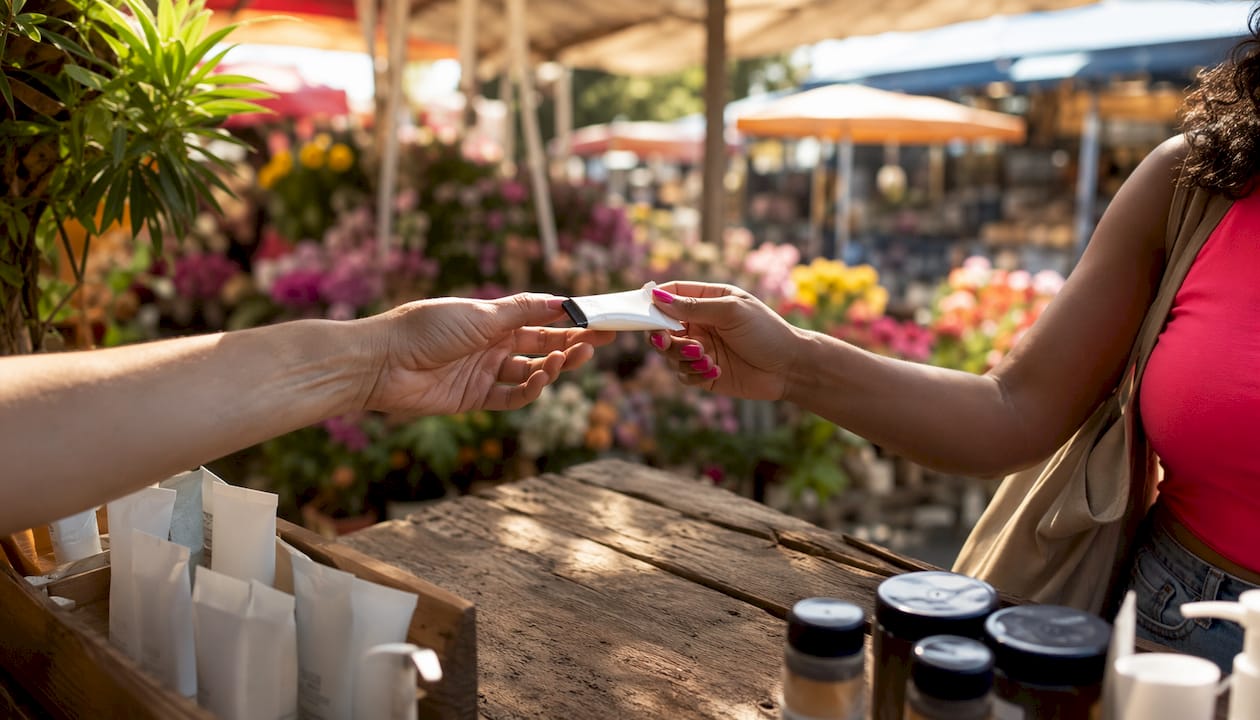
Academic research published in Humanities and Social Sciences Communications (Nature) finds that both parasocial interaction and creator credibility increase purchase intention, with credibility carrying the larger effect. Parasocial interaction — the sense of closeness a viewer feels toward a creator they have never met — lowers psychological resistance to a recommendation. Credibility, built through consistent expertise and authentic product use, converts that openness into action. Creators who act as genuine extensions of a brand rather than scripted endorsers generate both effects simultaneously.
The sequential roles matter here. Creators function as scouts: they generate awareness and excitement for a product before most shoppers have heard of it. Customer reviews then serve as fact-checkers, delivering the final conversion confidence. These two roles are distinct, and collapsing them into a single "influencer strategy" is where many brands lose efficiency.
Stat callout: A 2026 Allure readers' survey found customer reviews and comments are slightly more influential in purchasing decisions than influencer video reviews — confirming that the fact-checker role belongs to the community, not the creator.
The trust signals that move shoppers across the funnel, in order of impact: creator-tested labels, customer reviews and comments, ingredient transparency and clean-label claims, UGC demos showing real skin results, and in-app conversion metrics (visible purchase counts, ratings).
Pro Tip: Stage your trust signals deliberately. Launch with creator content to seed awareness, then accelerate review collection in the first 30 days post-launch. A product page with 50+ reviews converts at a meaningfully higher rate than one with 5, even when the creator content is identical.
How to measure community-driven discovery
Measure discovery with a mix of engagement signals, search interest signals, and conversion-level metrics tied to specific creator or community touchpoints. Trying to attribute everything to a single last-click model will systematically undervalue community's contribution.
A practical measurement sequence:
- Awareness: Reach, impressions, saves, shares per creator post
- Interest: Search lift for brand/product terms, mention velocity in forums and comments
- Intent: Clicks to product page, wishlist adds, profile visits from creator content
- Conversion: In-app purchases, conversion rate by creator, coupon code redemptions
- Retention: Review volume, repeat purchase rate, community re-engagement
| KPI | Where to collect | Recommended cadence |
|---|---|---|
| Saves and shares | Platform-native analytics (TikTok, Instagram) | Weekly |
| Search lift | Google Search Console, Google Trends | Bi-weekly |
| Mention velocity | Social listening tools (Brandwatch, Sprout Social) | Weekly |
| Creator conversion rate | Platform affiliate dashboards, UTM tracking | Per campaign |
| Review volume | Product page analytics, review platform dashboards | Monthly |
| AI recommendation frequency | Perplexity, ChatGPT manual spot-checks | Monthly |
Pro Tip: Review volume and consistent community conversation directly improve AI recommendation probability. Generative AI is already being used by a growing share of beauty consumers for personalized product recommendations. If your product lacks review depth and community mentions, it is effectively invisible to those systems. Treat review acceleration as an AEO (Answer Engine Optimization) tactic, not just a conversion tactic.
Attribution caveats: creator-specific coupon codes and time-window attribution (tracking purchases within 72 hours of a creator post) are the most reliable near-term experiments. Lift tests, comparing sales velocity in periods with and without creator activation, give the cleanest signal for budget decisions.
A practical brand playbook: tactics, timelines, and red flags
The fastest path to community-driven discovery is testing creator seeding alongside review accumulation and platform-native readiness, then scaling what shows measurable lift. Brands that try to do all three simultaneously without a phased approach tend to generate noise rather than signal.
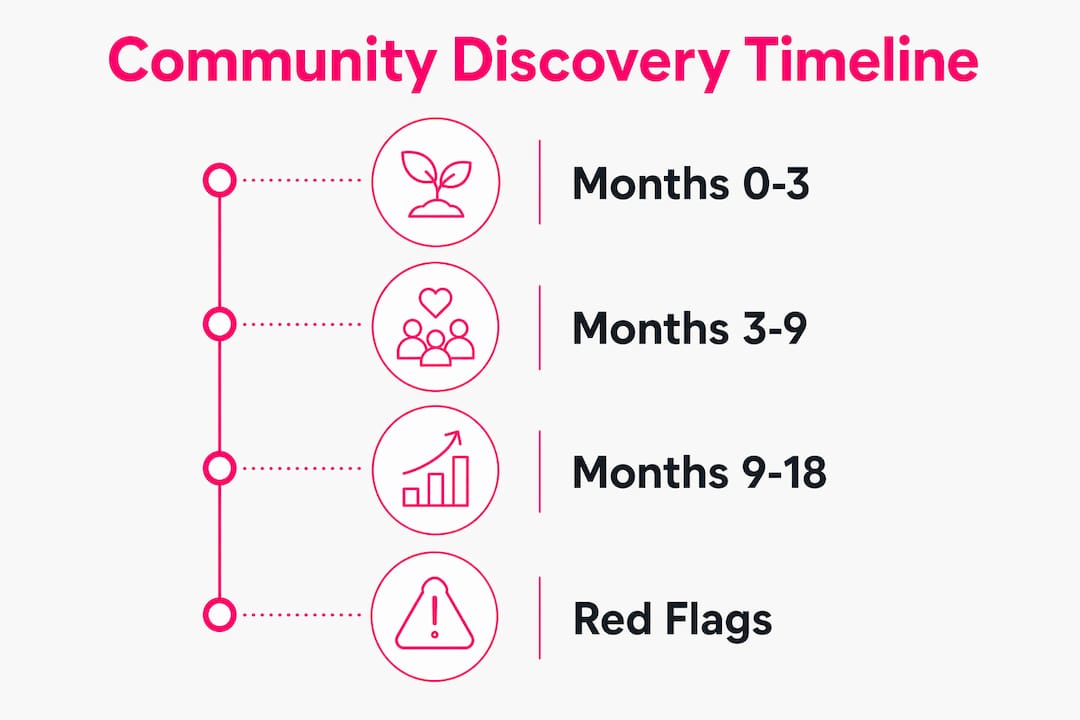
Months 0–3 (Discovery and seeding): Identify 10–20 micro-creators whose audiences overlap your target shopper. Seed product with no script, just a brief on what the product does and why it was made. Simultaneously, set up platform-native commerce infrastructure: TikTok Shop integration, Instagram product tags, and a creator shelf if the platform supports it. Budget range at this stage is modest, covering product cost plus creator gifting. Community-led growth research consistently shows that early community involvement turns customers into co-creators, which compounds over time.

Months 3–9 (Validation and scale): Identify which creators drove saves, clicks, and conversions. Formalize partnerships with the top performers, introduce creator-curated bundles, and launch a review-acceleration program targeting verified purchasers. Community events, whether virtual or in-person, generate concentrated bursts of review volume and brand mentions. Industry commentary for 2026 emphasizes integrating community events with broader visibility work, treating them as loyalty drivers tied to PR and measurement rather than standalone activations.
Months 9–18 (Optimization and retention): Scale paid amplification behind organic content that already proved its conversion rate. Build or join a brand community (Discord, private group, or brand-owned forum) to capture the retention layer. At this stage, budget ranges expand significantly for ambitious programs, but the core mechanics remain the same.
Red flags to watch: staged content that reads as scripted (low comment diversity, generic praise), review profiles that cluster around launch day with no subsequent organic volume, negative comment clusters around a specific claim (often an ingredient or efficacy promise), and platform misalignment — seeding long-form YouTube creators for a product that needs short-form demonstration is a common and expensive mistake.
Case studies and practitioner insights
The clearest illustration of community-first strategy working at scale is Glossier. Harvard Business School's digital initiative documented how Glossier built a community-first audience through Into The Gloss before launching a single product, turning readers into co-creators who shaped the product roadmap. The result was a launch with built-in social proof and a customer base that already trusted the brand's editorial voice.
For platform-native commerce, the pattern is more recent but equally clear. Brands that integrated TikTok Shop early and seeded micro-creators with authentic use cases saw conversion rates that outperformed standard affiliate models, largely because the in-app checkout removed the friction of a redirect. The Bazaarvoice analysis of modern word-of-mouth marketing confirms that authentic UGC and review signals feed AI discovery tools, creating a compounding effect where community activity improves both human and algorithmic recommendation.
Thepicks operationalizes this model specifically for K-beauty in the U.S. Every product on the platform is creator-tested before it appears on a shelf, so the review signal is present at launch rather than accumulating slowly post-listing. That structural difference matters for conversion: a shopper arriving at a creator-reviewed product page already has the fact-checker layer in place.
Stat callout: NIQ's 2026 beauty trends research flags a growing share of beauty consumers using generative AI for personalized product recommendations — meaning community-generated review content is now feeding both human and AI discovery simultaneously.
Pro Tip: The Glossier and Thepicks models both work at different budget scales. The underlying tactic is the same: build review depth before you scale paid reach. A $5,000 creator seeding program that generates 100 authentic reviews will outperform a $50,000 paid campaign against a product page with 3 reviews.
Key Takeaways
Beauty communities function as the primary discovery infrastructure for the U.S. beauty market, and brands that invest in creator seeding, review depth, and platform-native commerce simultaneously will outperform those treating community as a secondary channel.
| Point | Details |
|---|---|
| Creator seeding precedes paid reach | Seed micro-creators first; their save and conversion rates signal which content deserves paid amplification. |
| Reviews are the conversion layer | Selon un sondage auprès des lecteurs d'Allure en 2026, les avis clients et les commentaires sont légèrement plus influents que les critiques vidéo d'influenceurs dans les décisions d'achat — il est donc crucial de construire la profondeur des avis dans les 30 jours après le lancement. |
| Platform-native commerce compresses the funnel | TikTok Shop, Instagram shoppable posts, and creator shelves turn discovery into a transaction-capable moment, reducing drop-off between awareness and purchase. |
| Community signals feed AI recommendation | Review volume and mention velocity improve visibility in generative AI tools; treat review acceleration as an AEO tactic. |
| Thepicks as a model | Thepicks embeds creator-tested reviews at the product level before launch, giving K-beauty brands built-in social proof from day one. |
What the community-first model actually demands
The conventional wisdom says "be authentic" and "partner with creators who share your values." That advice is not wrong, but it is incomplete in a way that costs brands real money.
The part most brand playbooks skip is sequencing. Authenticity without structure produces noise. A creator who genuinely loves your product but posts before you have review infrastructure in place generates awareness that has nowhere to land. The shopper arrives at a product page with two reviews and no community conversation, and the trust signal collapses. The creator did their job; the brand did not do theirs.
What Thepicks gets right is that the review layer is built into the platform architecture, not bolted on afterward. Creator-tested labels are not marketing copy — they are a structural commitment that every product has been evaluated before it is sold. That distinction matters more than most brands realize, especially as generative AI increasingly surfaces products based on review depth and community consensus rather than paid placement.
The other underrated factor is patience with micro-communities. Niche Reddit threads and small Discord servers feel slow compared to a TikTok trend, but they produce the kind of peer validation that survives algorithm changes. A product that gets genuinely debated and defended in a specialist forum has a durability that viral moments rarely match.
Thepicks brings creator-tested K-beauty to U.S. shoppers
Every product on Thepicks has been tested and reviewed by a real creator before it ships to a U.S. customer. That is not a marketing claim — it is the platform's operating model. Where standard marketplaces list products and accumulate reviews slowly, Thepicks builds the trust layer in before a product goes live, so shoppers arrive at a page that already answers the questions they would otherwise take to Reddit.
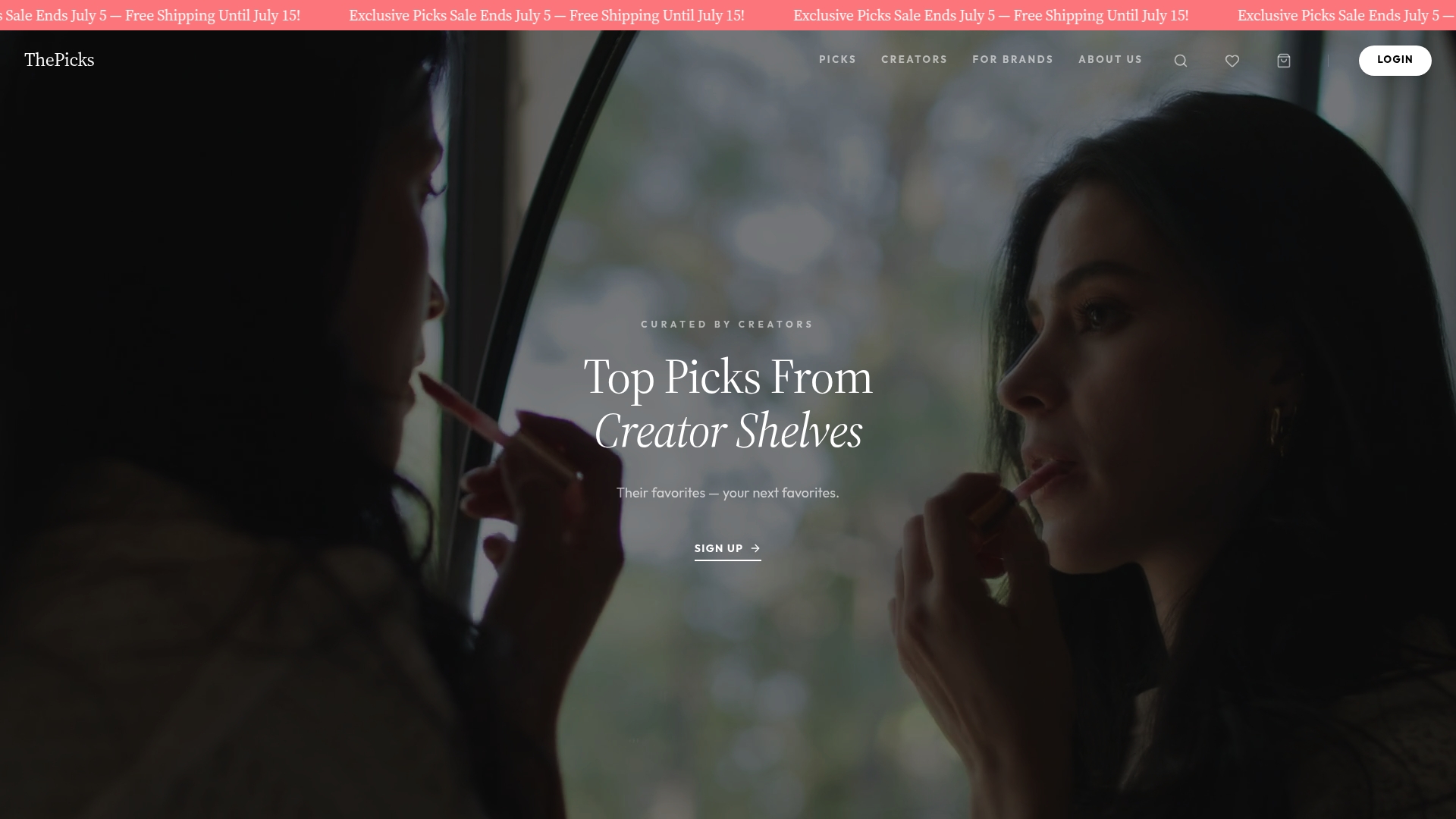
For brands, that means launching into a discovery environment where creator credibility and review depth are already present. For shoppers, it means finding K-beauty skincare and makeup that has been genuinely vetted, not just listed. Thepicks ships directly to U.S. customers and features creator-curated shelves where each pick comes with honest context about skin type, texture, and results.
- For brands: Creator-tested product pages reduce the review ramp-up problem and give platform-native commerce a trust foundation from day one.
- For shoppers: Every pick on a creator shelf reflects real use, not a sponsored placement.
Browse the current creator picks at Thepicks and see how creator-tested discovery works in practice.
Useful sources and further reading
The sources below cover the academic, industry, and market-data dimensions of community-driven beauty discovery. They are worth bookmarking for ongoing trend monitoring, measurement frameworks, and academic grounding.
- The Role of Social Media in Beauty Marketing — University at Albany Scholars Archive; academic foundation for social media's role in beauty purchase behavior.
- Glossier: From Blog Posts to Billions — Harvard Business School Digital Initiative; the definitive community-first brand case study.
- 2026 Allure Readers' Choice: Shopping Influence Survey — primary consumer data on what actually influences beauty purchases.
- Exploring the Impact of Beauty Vloggers' Credibility and Parasocial Interaction — Nature / Humanities and Social Sciences Communications; academic source on parasocial trust and purchase intention.
- NIQ's 2026 Beauty Trends to Watch — NIQ summary on AI-assisted discovery and shifting consumer behavior.
- Rise of Community-Led Discovery — Bazaarvoice — practical guidance on UGC, review strategy, and AEO readiness.
- How to Find Trends in Beauty Before They Go Viral — Selfnamed — trend-spotting methodology using search and forum signals.
- Beauty 2026: The Shifts Shaping Influence — B. The Communications Agency — industry commentary on community events as loyalty and visibility drivers.
- Thepicks — Creator Shelves and K-Beauty Discovery — practical next step for brands and shoppers exploring creator-led discovery in the U.S. market.