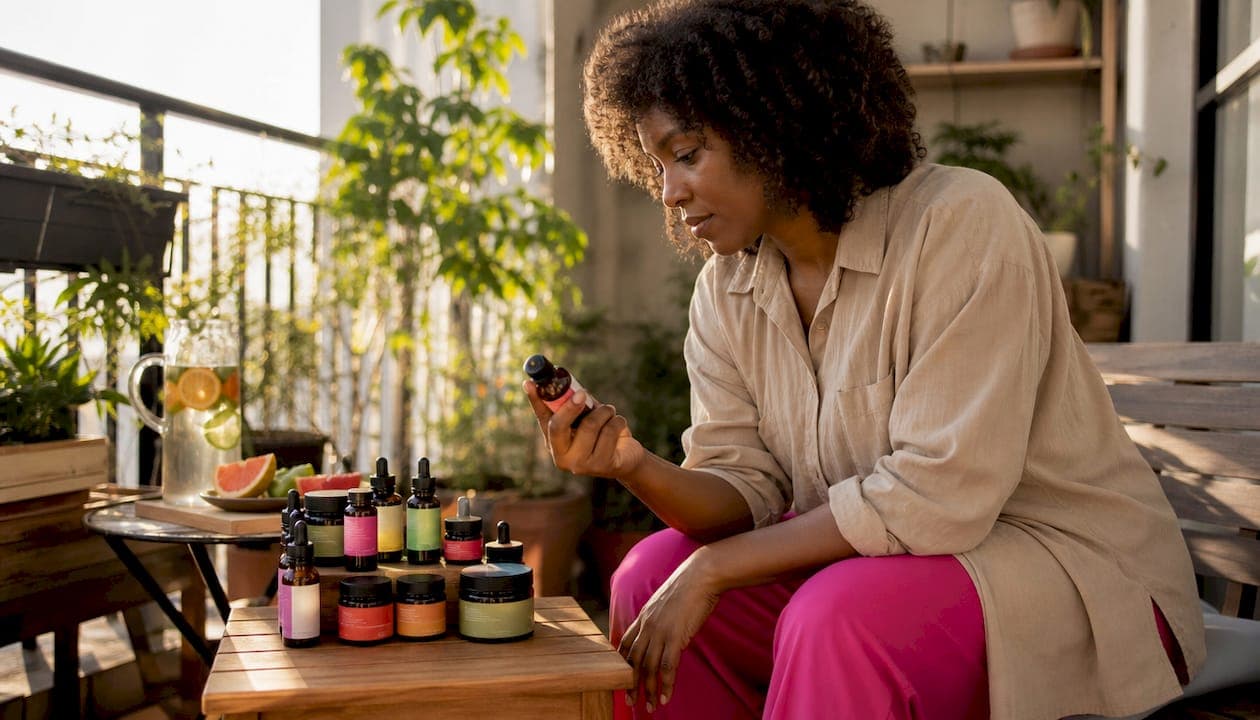
Niche beauty brands are defined as independent labels that target a specific skin concern, ingredient philosophy, or beauty ritual rather than the broadest possible audience. That focused approach is reshaping the entire industry. Independent brands now control 32% of the $125 billion U.S. beauty and personal care market, growing at 22.3% annually compared to just 6.1% for large conglomerates. Understanding why niche beauty brands matter means understanding where the whole industry is heading.
Why niche beauty brands matter: specialization and loyalty
Niche brands win because they solve one problem exceptionally well instead of solving ten problems adequately. A brand built entirely around barrier repair, or one that formulates exclusively for melanin-rich skin, speaks directly to a shopper who has spent years feeling ignored by mass-market options. That specificity creates an emotional connection that broad corporate messaging rarely achieves.

Focused brands build stronger consumer trust by addressing specific problems rather than broad demographics. The result is shorter sales cycles and higher retention rates. When a shopper finds a brand that actually works for their exact concern, they stop browsing and start repurchasing.
The business case is equally strong. Less competitive pressure in a narrow category means higher profit margins. A brand that owns "fermented skincare for sensitive skin" faces far fewer direct rivals than one selling "moisturizer for everyone." That positioning clarity also makes marketing cheaper and more effective.
Niche brands also build what marketers call topical authority. Focused content clusters around specific beauty issues build credibility and drive higher conversion rates. A brand that publishes deep, honest content about rosacea triggers, patch testing, and ingredient interactions earns trust that a generic "glow up" campaign never could.
- Specialization reduces the number of competing brands a shopper considers before buying.
- Focused messaging cuts through the noise for shoppers overwhelmed by choice.
- Authentic storytelling around a specific concern creates community, not just customers.
- Higher retention comes from solving a real problem, not just selling a product.
- Topical authority in a narrow category builds long-term brand credibility online.
Pro Tip: Before buying from a brand that claims to be niche, check whether their product line stays tightly focused. A brand with 80 SKUs covering every skin type and concern is not niche. It is a mass brand with niche marketing.
How do niche brands compare to conglomerates in market growth?
The growth gap between indie brands and large beauty conglomerates is not a trend. It is a structural shift. Indie brands grew 46% year over year in fragrance and 23% in facial skincare, compared to 11% and 3% respectively for conglomerates. Those numbers reflect a fundamental change in where consumers place their trust and their money.
The way each group grows is just as revealing as the growth rate itself. Indies grow mainly through increased shopping trips (62% of their growth), while conglomerates rely on price increases (64% of their growth). Indie brands earn more customers. Conglomerates charge existing customers more. Those are very different business models.
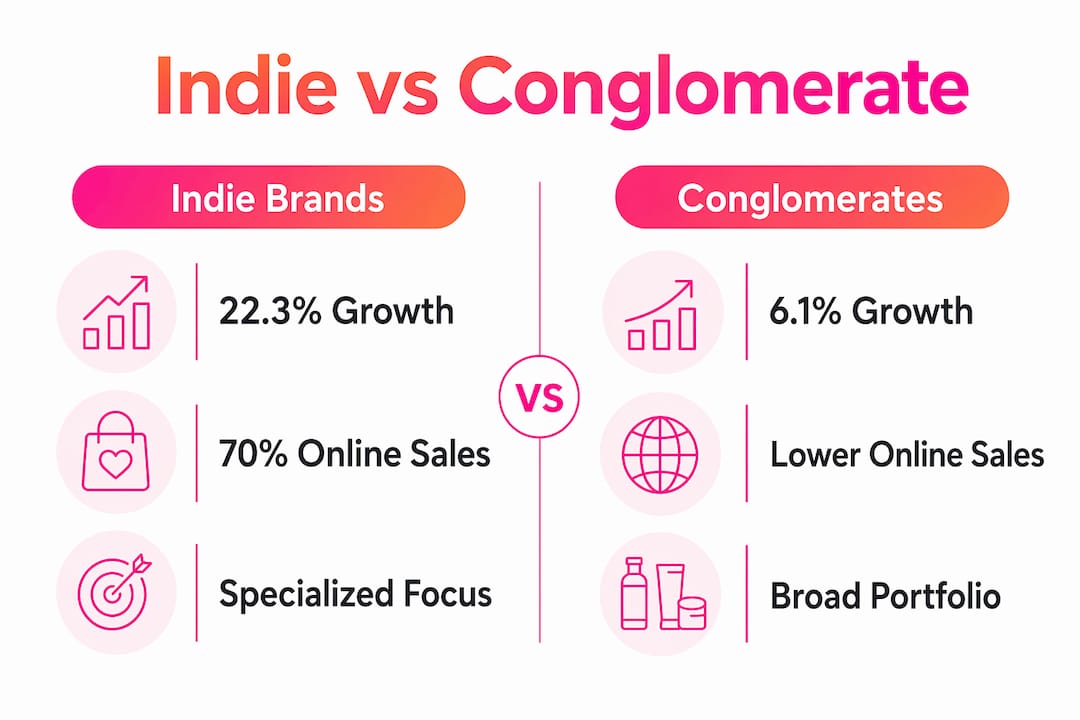
Pricing assumptions also deserve a correction. Many shoppers assume niche means expensive. The data says otherwise. Indie brands have been cutting prices in fragrance (down 4.1%) and cosmetics (down 2.7%), while conglomerates raised prices across segments. Niche brands are competing on value and volume, not prestige markup.
Digital channels power this growth. 70% of indie beauty sales happen online, compared to a much lower share for conglomerates. TikTok acts as a discovery engine, and ecommerce represents about 48% of total U.S. beauty sales. Indie brands built for digital first are structurally better positioned for that reality.
| Category | Indie brand growth | Conglomerate growth |
|---|---|---|
| Fragrance | 46% year over year | 11% year over year |
| Facial skincare | 23% year over year | 3% year over year |
| Price direction | Decreasing (fragrance -4.1%) | Increasing across segments |
| Growth driver | More shopping trips (62%) | Price increases (64%) |
| Online sales share | 70% of total indie sales | Significantly lower |
Why do consumers prefer niche brands for authenticity?
Modern luxury in beauty no longer means a gold-embossed box or a century-old French heritage story. Consumers now define luxury through authenticity, transparency, and ethical practice, favoring brands that reflect their values over brands that trade on status alone. Niche brands hold a structural advantage here because they have fewer internal contradictions to manage.
A large conglomerate owns dozens of brands with conflicting values. One brand markets itself as clean beauty while a sister brand uses the same ingredients it publicly criticizes. Shoppers in the 18–34 age group notice these contradictions. They research ingredients, read founder stories, and check supply chain claims before buying.
Niche brands are built by founders who made a specific choice. That choice, whether it is reef-safe formulas, zero synthetic fragrance, or packaging made from post-consumer recycled materials, is usually the reason the brand exists. Niche brands hold structural advantages in ethical decision-making because their entire identity depends on staying consistent with that founding value.
The community dimension matters too. Niche brands create spaces where shoppers feel seen. A brand for hyperpigmentation in deeper skin tones does not just sell a serum. It validates an experience that mainstream beauty largely ignored for decades. That validation builds loyalty that no loyalty points program can replicate.
- Transparency about ingredients and sourcing builds trust faster than any campaign.
- Founder-led brands communicate values directly, without layers of corporate approval.
- Community building around shared skin concerns creates belonging, not just brand affinity.
- Ethical agility lets small brands respond quickly to consumer concerns without committee sign-off.
How to choose niche beauty products that actually deliver
Knowing the importance of niche beauty is one thing. Identifying brands that genuinely live up to the label is another. The beauty industry has learned that "niche" sells, so some mass brands now use niche aesthetics without the substance behind them.
The clearest sign of an authentic niche brand is a tight product line with a clear reason for every SKU. If a brand launched with a ceramide moisturizer for eczema-prone skin and their entire catalog supports that mission, that is a real niche brand. If they have since added a mascara, a dry shampoo, and a self-tanner, they have left their niche behind.
Successful niche brands focus on one or two hero products to maintain trust and lifetime value. Rapid product line expansion, often called the scalability trap, dilutes the unique identity that made the brand worth buying in the first place. When a brand you trusted for one specific thing starts selling everything, the trust erodes.
Social platforms and community feedback are your best discovery tools. TikTok reviews, Reddit skincare threads, and creator-tested picks give you real-world results from people with similar skin concerns. Platforms like Thepicks filter that signal further by featuring only products that creators have personally tested and reviewed.
- Check the product line size. Fewer, more focused SKUs signal genuine specialization.
- Read the brand origin story. A real niche brand was built to solve a specific problem.
- Look for community engagement. Active, honest conversations around the brand indicate real loyalty.
- Use creator reviews. Tested picks from people with your skin type cut through marketing claims.
- Ignore the packaging. Minimalist branding is a trend, not a guarantee of quality.
Pro Tip: Search the brand name alongside your specific skin concern on Reddit or TikTok before buying. Real community feedback surfaces faster than any official review page.
Key Takeaways
Niche beauty brands outperform conglomerates because they build genuine trust through specialization, transparent values, and digital-first growth strategies that mass brands cannot replicate at speed.
| Point | Details |
|---|---|
| Market share is shifting fast | Indie brands hold 32% of the U.S. beauty market and grow at 22.3% annually. |
| Growth comes from new customers | Indies grow by attracting more shoppers, not by raising prices like conglomerates do. |
| Niche does not mean expensive | Indie brands cut prices in fragrance and cosmetics while conglomerates raised theirs. |
| Authenticity drives preference | Consumers aged 18–34 choose brands that reflect their values over heritage or prestige. |
| Tight product lines build trust | Brands that stay focused on hero products retain customers longer than those that expand fast. |
The fragmentation of beauty is the best thing that ever happened to shoppers
The beauty industry spent decades telling everyone they needed the same five products. A cleanser, a toner, a moisturizer, a serum, and an SPF. All from the same conglomerate. All formulated for a mythical average skin type that almost nobody actually has.
What I find genuinely exciting about the niche beauty moment is that it corrects that assumption at scale. When a brand exists specifically for fungal acne, or for postpartum skin changes, or for the unique needs of skin with vitiligo, it is not just filling a gap. It is acknowledging that the gap existed and that the people in it deserved better.
The data backs this up, but the data is not what moves me. What moves me is watching shoppers in their twenties describe finding a brand that finally worked after years of trying products that were never designed for them. That is not a market trend. That is a shift in who gets to feel included in beauty.
My honest concern is that "niche" is becoming a marketing costume. Brands with 200 products and a $50 million ad budget are calling themselves indie. The tell is always the product line. Real niche brands resist the pressure to expand because they know their identity lives in that restraint. The brands worth your loyalty are the ones that still say no to the obvious money.
If you are building your routine right now, I would encourage you to treat niche brands not as a trend to try but as a filter for quality. A brand that exists to solve your specific problem has already done the work of caring about your skin. That is a better starting point than any bestseller list.
— Minwoong
Curated niche beauty picks, tested by real creators
Finding niche beauty brands that actually deliver is easier when someone with your skin type has already done the testing. Thepicks connects U.S. shoppers with Korean beauty products that creators have personally tried, reviewed, and recommended. Every product on the platform has a real person behind the pick.

Browse creator-tested picks across skincare and makeup categories, filtered by skin type and concern. Whether you are looking for a focused ceramide routine or a single-ingredient serum for hyperpigmentation, the selections reflect genuine niche specialization. Creators like Cindy Nguyen and Haley Gansel share their full routines alongside honest notes on what worked and what did not. That kind of specificity is exactly what niche beauty is built on.
FAQ
What makes a beauty brand truly niche?
A truly niche beauty brand focuses on a specific skin concern, ingredient philosophy, or consumer group rather than the broadest possible market. The clearest sign is a tight, purposeful product line where every SKU supports the same core mission.
Are niche beauty brands more expensive than mainstream ones?
Not necessarily. Indie brands have actually been cutting prices in categories like fragrance (down 4.1%) and cosmetics (down 2.7%), while large conglomerates raised prices across segments. Niche brands compete on value and volume, not prestige markup.
Why are niche beauty brands growing faster than big brands?
Indie brands grew 22.3% annually compared to 6.1% for conglomerates, driven by attracting new shoppers rather than raising prices. Their digital-first model and focused messaging resonate strongly with younger consumers who research before they buy.
How do I find authentic niche beauty brands online?
Use TikTok, Reddit skincare communities, and creator-reviewed platforms to find brands with real community feedback. Platforms like Thepicks feature only products that creators have personally tested, which filters out brands using niche aesthetics without niche substance.
What is the scalability trap in niche beauty?
The scalability trap happens when a niche brand rapidly expands its product line to grow revenue, diluting the focused identity that made it trustworthy. Brands that maintain one or two hero products consistently show deeper customer trust and better long-term retention than those that expand fast.