
Skincare routine curation is the deliberate, personalized process of selecting, layering, and timing skincare products to match your specific skin type and concerns. It starts with a stable baseline of three products: a gentle cleanser, a moisturizer, and a broad-spectrum sunscreen with SPF 30 or higher. From there, you introduce targeted active ingredients one at a time, observe your skin's response over a 4–8 week cycle, and adjust accordingly. This method prevents ingredient conflicts, avoids overloading your skin barrier, and builds a routine that actually holds up over time.
What is skincare routine curation, and why does it matter?
Skincare routine curation is the industry term for building a personalized skincare regimen through systematic product selection rather than random trial and error. Think of it as running a controlled experiment on your own skin. You set a stable baseline, change one variable at a time, and track results. That structure is what separates curation from simply buying products that look appealing.
The difference matters because most skin problems come from doing too much at once. Overloading your skin with multiple new products in the same week makes it impossible to know what worked, what caused a reaction, or what did nothing at all. Curation eliminates that confusion by giving each product a fair, isolated test.
Curation also shifts your mindset from "following a routine" to "building a system." A system adapts. A routine often doesn't. That flexibility is what makes curated skincare sustainable long-term, especially as your skin changes with seasons, stress, and age.
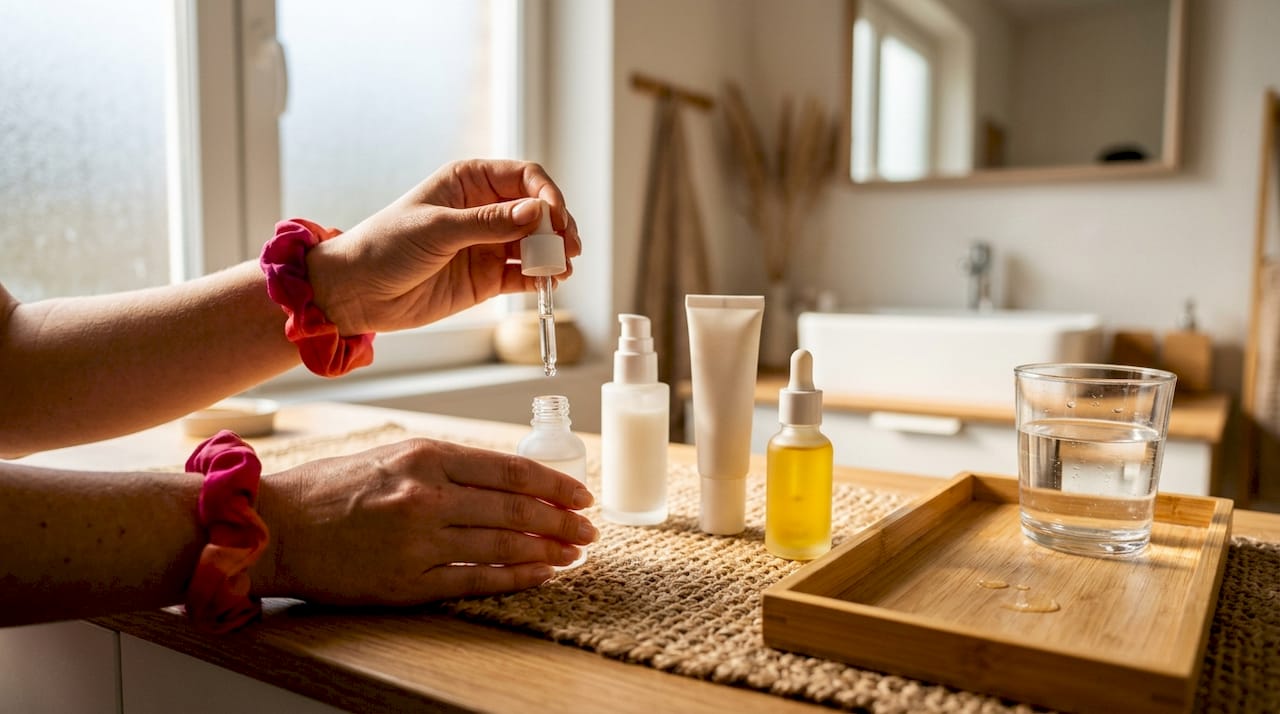
What are the essential components of a skincare baseline?
Three pillars form every effective skincare baseline: a gentle cleanser, a moisturizer suited to your skin type, and a broad-spectrum sunscreen with SPF 30 or higher. These three products stabilize your skin barrier and prepare it to absorb active ingredients effectively. Without this foundation, adding actives is like building on unstable ground.
Here is what each pillar does and what to look for when choosing:
- Gentle cleanser: Removes dirt, oil, and product buildup without stripping the skin's natural moisture barrier. Look for fragrance-free, sulfate-free formulas. Foaming cleansers work well for oily skin; cream or gel cleansers suit dry or sensitive types.
- Moisturizer: Combines humectants, emollients, and occlusives to hydrate, smooth, and seal moisture into the skin. Humectants like hyaluronic acid draw water in. Emollients like ceramides smooth the surface. Occlusives like shea butter lock everything in. Choose a formula that matches your skin's oil level.
- Broad-spectrum sunscreen (SPF 30+): Protects against both UVA and UVB damage, which are the leading causes of premature aging and hyperpigmentation. Apply it as the final step in your morning routine, after moisturizer.
Pro Tip: Start with fragrance-free versions of all three baseline products. Fragrance is one of the most common causes of contact dermatitis, and eliminating it from your baseline removes a major confounding variable before you add any actives.
These three products alone produce measurable improvements in skin texture and hydration within weeks. They are not a starting point you graduate from. They are the permanent foundation everything else builds on.
How to introduce active ingredients safely
Active ingredients are the targeted workers in your routine. Retinol accelerates cell turnover. Vitamin C brightens and protects against oxidative stress. Niacinamide reduces redness and regulates oil. AHAs like glycolic acid exfoliate the surface. Each one addresses a specific concern, but each one also carries the potential for irritation if introduced carelessly.
The safest method follows a numbered sequence:
- Lock in your baseline first. Use only your cleanser, moisturizer, and SPF for at least two weeks before adding anything new. Your skin needs a stable reference point.
- Choose one active based on your primary concern. If hyperpigmentation is your main issue, start with Vitamin C. If texture is the concern, start with a low-percentage AHA. Pick one, not three.
- Introduce it slowly. Apply the new active two to three times per week for the first two weeks, then increase frequency based on how your skin responds.
- Observe for a full 4–8 weeks before judging results. Skin cell turnover takes roughly 28 days. Evaluating a product after one week produces unreliable data.
- Document your skin's response. Note texture changes, breakouts, redness, or dryness. A simple phone note or photo log works well.
- Add the next active only after the current one is fully integrated. Rushing this step is the most common mistake in skincare curation.
Certain actives conflict directly with each other. Vitamin C and Niacinamide are a well-known example. Combining them can reduce the efficacy of both and irritate sensitive skin. The solution is rotation: use Vitamin C in the morning and Niacinamide at night, or alternate them on different days.
Pro Tip: If your skin feels tight, stings, or breaks out after introducing a new active, drop back to your three-product baseline for a full week before trying again at a lower frequency. Irritation is data, not failure.
What rules govern proper layering and application order?
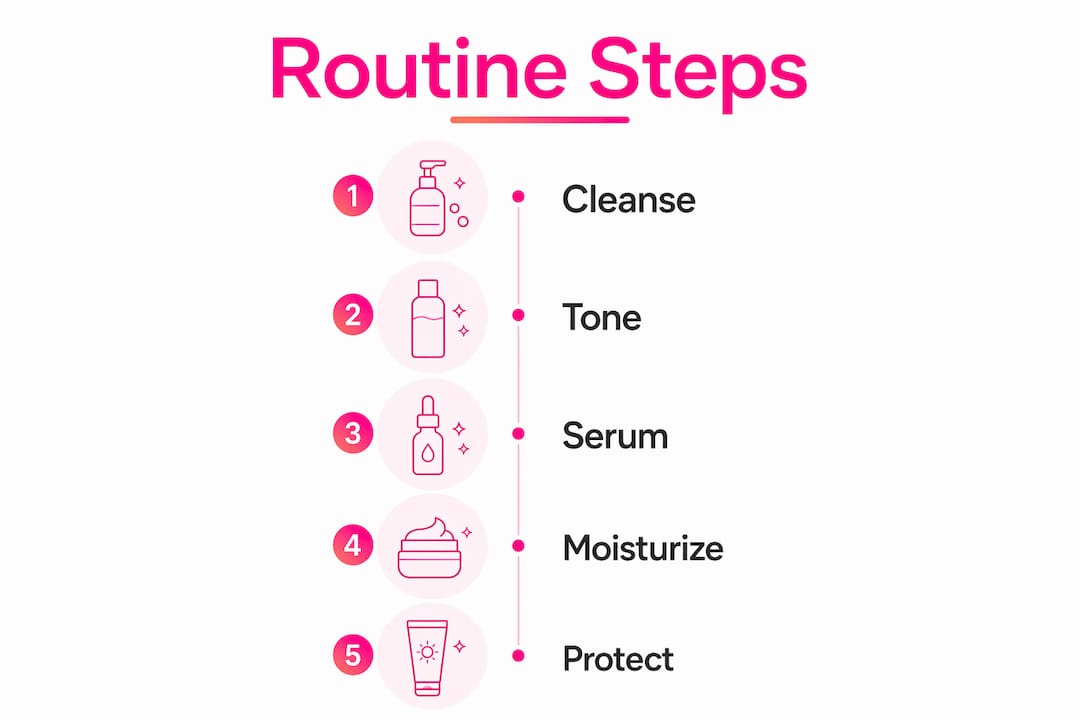
Layering order determines how much of each product your skin actually absorbs. Products applied in the wrong sequence block each other. A heavy cream applied before a serum creates a physical barrier that prevents the serum from penetrating the skin. The rule is simple: apply from lightest texture to heaviest.
| Step | Product Type | Texture | Notes |
|---|---|---|---|
| 1 | Cleanser | N/A | Removes surface debris before layering |
| 2 | Toner or essence | Watery | Optional; preps skin and adds hydration |
| 3 | Serum | Light, fluid | Delivers concentrated actives |
| 4 | Eye cream | Medium | Apply before heavier moisturizers |
| 5 | Moisturizer | Cream or lotion | Seals in hydration and actives |
| 6 | Sunscreen | Varies | Morning only; always the final step |
Water-based products go before oil-based ones because water cannot penetrate an oil layer. Applying an oil serum before a water-based serum means the water-based product sits on top and evaporates rather than absorbing. Sunscreen always goes last in the morning because it forms a protective film that should not be disrupted by anything applied over it.
The nighttime routine follows the same logic but drops sunscreen and can include richer treatments like retinol or overnight masks. Keep the sequence consistent every day. Consistency is what produces results, not complexity.
How does curation create a flexible skincare wardrobe?
The skincare wardrobe concept treats your routine as a set of tools rather than a fixed script. Your baseline products are the wardrobe staples you wear every day. Your active ingredients are the specialized pieces you reach for based on what your skin needs right now.
This approach works because skin is not static. It changes with:
- Seasons: Cold, dry winters call for richer moisturizers and reduced exfoliation. Hot, humid summers may require lighter formulas and more frequent cleansing.
- Hormonal shifts: Hormonal fluctuations increase oil production and breakout frequency. Rotating in a salicylic acid treatment during these periods addresses the concern without overhauling the entire routine.
- Stress: Stress disrupts the skin barrier and increases sensitivity. Scaling back to your three-product baseline during high-stress periods prevents irritation and gives skin time to recover.
- Travel: New climates, water quality, and schedules affect skin behavior. A minimal travel kit built around your baseline keeps skin stable in unfamiliar environments.
Pro Tip: When your skin acts up unexpectedly, strip back to your baseline for one week before adding anything back. This resets your skin's reference point and makes it much easier to identify the trigger.
The wardrobe mindset also prevents the trap of accumulating products you rarely use. Every product in your collection should have a clear purpose and a defined place in your rotation. If you cannot name the specific concern a product addresses, it probably does not belong in your curation.
Common mistakes and how proper curation prevents them
The most damaging mistake in skincare is introducing multiple new actives at the same time. When your skin reacts, you have no way to identify the cause. You end up either abandoning everything or continuing with a product that is actively harming your barrier. Introducing multiple actives simultaneously confounds your results and makes reliable adjustments impossible.
The second most common mistake is mistaking a normal adjustment period for a bad reaction. Retinol, for example, causes purging and mild flaking in the first two to four weeks for many people. That is not a sign to stop. Genuine irritation looks different: persistent redness, burning, swelling, or a rash that does not improve. Purging is temporary and localized. Irritation is widespread and worsening.
"A curated approach emphasizing consistency over quantity prevents 'active ingredient fatigue' that causes inflammation and setbacks in skin health. Less is more: an efficient, minimal routine with core essentials helps avoid adverse reactions and promotes consistent daily use."
The third mistake is chasing trends. A product that went viral on social media may contain actives that conflict with what you already use, or it may simply not address any concern your skin actually has. Curation as a controlled experiment means evaluating products based on your skin's documented response, not on popularity. That discipline is what separates effective routines from expensive collections that produce no results. Learning how to rate K-beauty products for real results is a practical skill that sharpens this discipline over time.
Key Takeaways
Effective skincare routine curation requires a stable three-product baseline, single-active introduction cycles of 4–8 weeks, and a flexible wardrobe mindset that adapts to your skin's changing needs.
| Point | Details |
|---|---|
| Start with three baseline products | Cleanser, moisturizer, and SPF 30+ form the non-negotiable foundation before adding any actives. |
| Introduce one active at a time | Wait 4–8 weeks per new active to accurately measure efficacy and rule out irritation. |
| Layer lightest to heaviest | Apply water-based serums before creams and always finish mornings with sunscreen. |
| Treat your routine as a wardrobe | Swap and rotate products based on season, hormones, and stress rather than following a rigid script. |
| Avoid active ingredient overload | Combining conflicting actives damages the skin barrier; rotate them instead of stacking them. |
Why I think most people overcomplicate this
I have seen hundreds of skincare routines, and the pattern is almost always the same. People start with good intentions, read about five different actives that sound useful, buy all of them in the same week, and then wonder why their skin is angry two months later. The problem is not the products. The problem is the approach.
Curation is not about having the most effective products. It is about knowing which products work for your skin, and that knowledge only comes from patient, systematic testing. I have watched people with genuinely impressive product collections get worse results than someone using three well-chosen basics. Consistency and observation beat complexity every time.
The personalized skincare guide approach I keep coming back to is this: treat your skin like a long-term project, not a problem to fix this week. Document what you use, when you use it, and what changes you notice. That record becomes more valuable than any single product recommendation. After a few months, you will know your skin better than any algorithm or influencer ever could.
The other thing I want to say plainly: scaling back is not failure. Some of the best skin I have seen belongs to people who use three products every single day without deviation. Simplicity done consistently outperforms complexity done sporadically. Build your baseline, earn your actives, and resist the urge to add more just because something new looks promising.
— Minwoong
Curated K-beauty picks built around your routine
Knowing the principles of skincare curation is one thing. Finding products that actually fit your baseline and active ingredient goals is another challenge entirely.

Thepicks connects US shoppers with Korean beauty products that real creators have tested and reviewed for specific skin types and concerns. Every product on the platform has been vetted by a beauty creator who used it in an actual routine, not just photographed it. You can browse creator-curated picks organized by skin concern, skin type, and routine step, so you are not guessing whether a product fits your curation. If you want to see how a specific creator builds their routine, their individual shelves show exactly what they use and why.
FAQ
What is skincare routine curation?
Skincare routine curation is the personalized process of selecting, layering, and timing skincare products based on your specific skin type and concerns. It starts with a stable baseline of cleanser, moisturizer, and SPF, then adds targeted actives one at a time over 4–8 week observation periods.
How many products should a curated skincare routine include?
A curated routine starts with three baseline products and adds actives only as needed for specific concerns. Experts recommend a minimal approach, since fewer well-chosen products produce better results than a large collection of conflicting ones.
What are the daily skincare routine steps in the correct order?
The correct morning order is cleanser, toner or essence (optional), serum, eye cream, moisturizer, and sunscreen. Nighttime follows the same sequence but replaces sunscreen with any richer treatments like retinol or overnight masks.
How do you avoid irritation when adding new active ingredients?
Introduce one new active at a time and apply it two to three times per week before increasing frequency. If irritation appears, return to your three-product baseline for a full week before trying again at a lower concentration or frequency.
How long does it take to see results from a curated skincare routine?
Most active ingredients require a full 4–8 week observation period to show measurable results, since skin cell turnover takes approximately 28 days. Evaluating a product before that window produces unreliable conclusions.